
Minarets that stand like guards, mosques that tell stories with their blue and orange colors. Get ready to discover Bukhara in all its splendor. Below, I will guide you through the treasures of this city so you won’t miss a single detail.
Bukhara envelops you with centuries of history, culture and mosaic architecture. Listing all the things to do in Bukhara is a challenge; it takes at least two full days to fully tour this place. But I have managed to capture 25 sites for you to delight in your visit.
Despite the scorching heat that limits walks to early morning or late afternoon, the city captivated me. From the Ark Fortress to the Kalon Minaret, the Ulugbek and Abdul Aziz Khan Madrasas, the bustling covered bazaars to the serenity of Lyabi-Hauz Square; each step not only reveals diverse architectures, but also takes you through centuries of history and different ruling dynasties.
The highlight is the majestic Kalon Minaret and its companion, the mosque of the same name. Here, the sunset becomes a masterpiece worthy of contemplation.
This city has experienced everything throughout its history and that is the thread that runs through the sites to see in Bukhara: it was the jewel of the Samanids resisted Genghis Khan, became the capital of the Timurids was an important stop for merchants and travelers on the Silk Road, was a part of the Shaybanid dynasty and was under Russian power until independence in 1991.
The madrasas, mosques and minarets that dot the city are silent witnesses to all this history. Bukhara, in its heyday, was home to more than 100 madrasas with some 10,000 students and nearly 300 mosques, making it a religious and cultural epicenter of Central Asia. Most of these buildings were built during the reign of the Shaybanid dynasty in the Khanate of Bukhara.
Below, as a suggestion, just based on my experience visiting Bukhara and traveling in Uzbekistan, I show you my 25 must-sees for you to immerse yourself in the highlights.
🔝 Want to know more about this country? Check out our complete travel guide to Uzbekistan, with the best tips and recommendations.
🔝 See also our suggested itinerary for Uzbekistan in 15 days (and we’ll show you the one we did!).
✅ The Historic Center of Bukhara is a Unesco World Heritage Site. In the buildings and monuments, there are signs indicating this distinction.
MAP – Things to do in Bukhara
Although its streets may seem like a labyrinth, Bukhara invites to be walked through with calm and surprise at every corner. The city lends itself to be explored on foot, allowing you to immerse yourself in its historical charm without being rushed.
Bukhara offers an experience where historical treasures and architectural gems intertwine with everyday life. From the majesty of the Kalon Minaret to the quieter corners of Lyabi-Hauz Square, on this map you will find the main sites to see in Bukhara that reveal the richness of this jewel of Central Asia.
📝 Take note! In most mosques, madrasas and mausoleums you have to pay to enter (or there will be someone who will demand that you pay), even if inside they only have souvenir stores or are quite dilapidated (or both at the same time). It doesn’t cost much per ticket, but since there are so many sites, it adds up. Keep this in mind if you are traveling on a tight budget.
On the map, you can see the 25 things to do in Bukhara that I have selected. I have grouped them by zones or themes, in the case of the covered bazaars. This way, you can organize your travel days well.
📷 Don’t get overwhelmed with the number of places to visit in Bukhara! Book a city tour
city tour with an English-speaking guide to tell you to tell you all the most fascinating details and stories. Let yourself go!
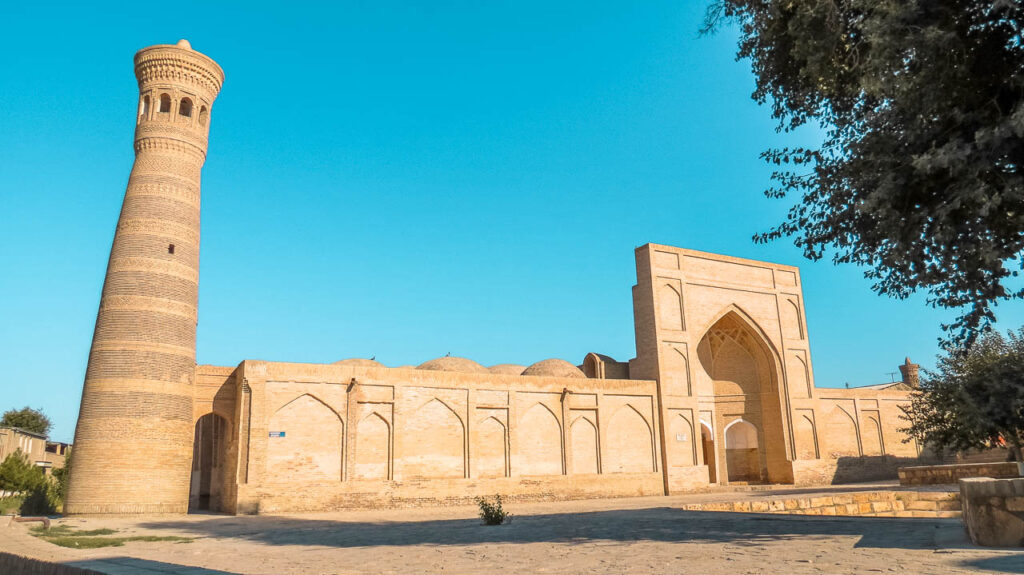
1) Kalon Minaret
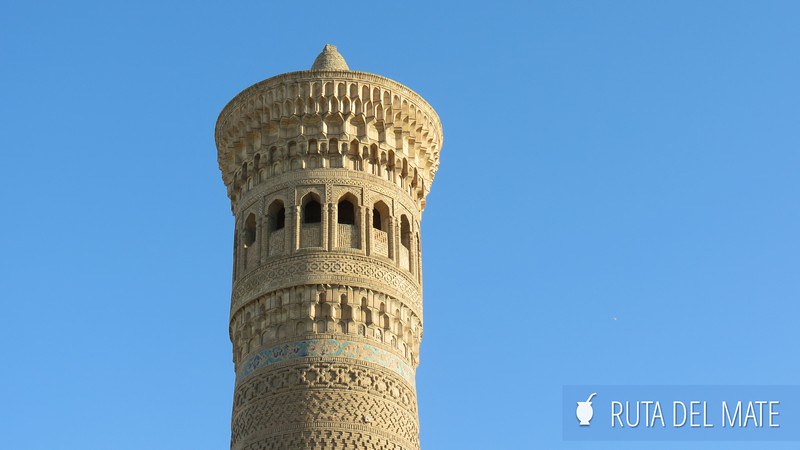
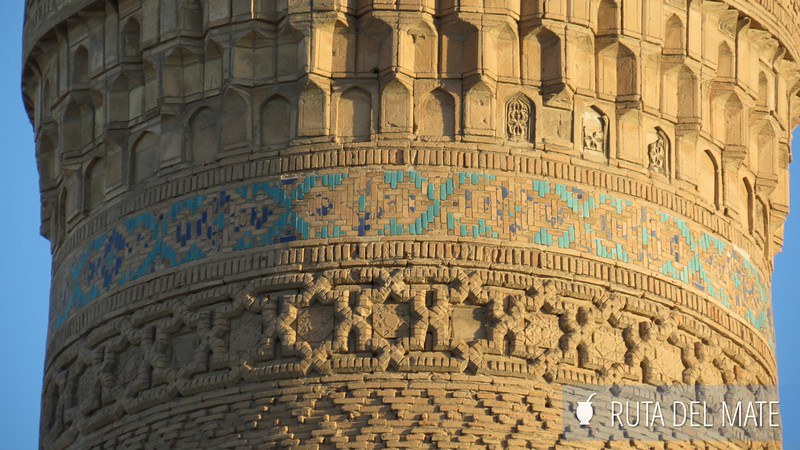
The imposing Kalon Minaret stands like a guardian overlooking the city’s skyline in Poi-Kalyan Square and visiting this jewel is one of the main things to do in Bukhara. Built during the Qarajanid dynasty, this minaret was once the tallest building in all of Central Asia.
Its structure, adorned with hand-carved reliefs, amazed me. From its strategic location, the minaret is visible from several points of the city, offering an unforgettable postcard.
2) Kalon Mosque
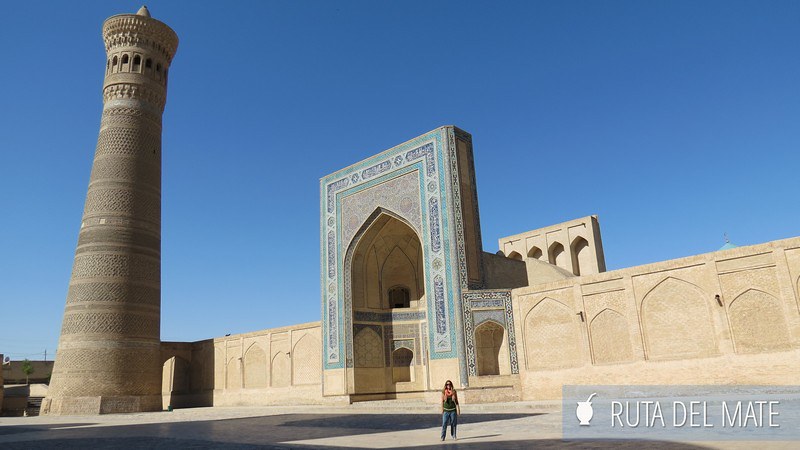
Right next door, the Kalon Mosque accompanies the minaret in architectural harmony. Its presence adds splendor to the place, with colors that change according to the light of the day, revealing shades of ochers, browns and bricks.
This mosque is more than a place of worship; it is a window into the city’s past splendor. Take your time to explore its details and absorb the unique atmosphere it offers.
We have returned again and again to this site, as it is really impressive. The facades of the mosques next to the minaret change color depending on how the sun shines on them. A delight!
3) Madrasa Mir-i-Arab
Opposite the Kalon Mosque and separated by Poi-Kalyan Square, the Mir-i-Arab Madrasa completes this trio of wonders. Its traditional architecture and meticulous detailing tell stories of learning and devotion. The madrasa is a testament to the importance of education in Bukhara’s rich history.
As you explore this collection of monuments, you will be immersed in the grandeur of a bygone era while enjoying the changing palette of colors offered by the sunlight.
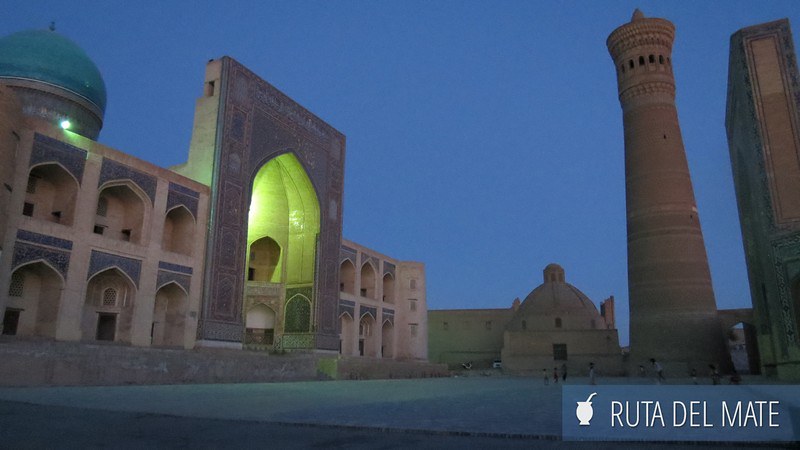
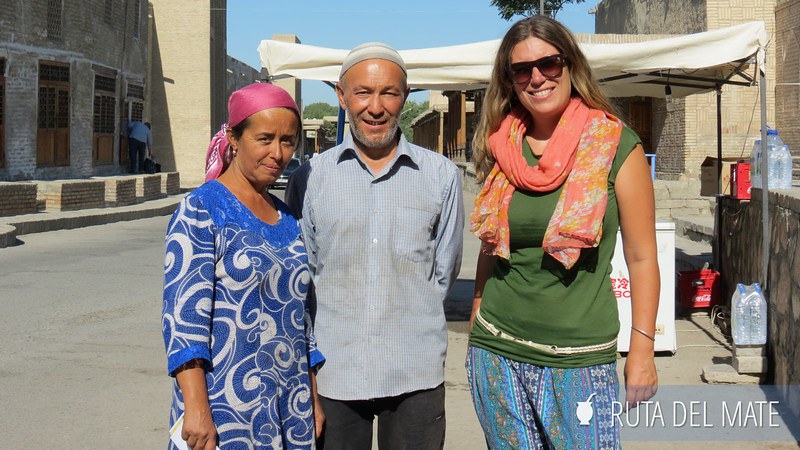
Anecdote “A Special Encounter at Poi-Kalyan Square”. Every day we spent at least some time in this square and during one of these visits, we stood admiring the mix of colors at sunset. While enjoying the place, we struck up a conversation with the friendly vendor at a nearby stall. This passionate salesman showed us a box full of souvenirs and postcards from visitors from all over the world, but we noticed something was missing: a postcard from Argentina. We agreed to take a photo with him and his wife, who skillfully decorates dishes by hand to sell them. We promised to send them the photo with a postcard, thus creating a special bond with this corner of Bukhara. A reminder of how travel is not only about places, but also about people and unexpected connections.
4) Emir Alimkhan Madrasa
Located to the right of the Kalon Minaret, the Emir Alimkhan Madrasa often goes unnoticed from Poi-Kalyan Square.
Built in the early 20th century during the reign of Emir Alimkhan, the last emir of Bukhara, this madrasa replicates the 18th century style so as not to clash with the architecture of its illustrious neighbors: the Mir-i-Arab Madrasa and the Kalon Mosque. Although not a must-see in Bukhara, this unique building amidst the many madrasas offers a fascinating insight into local history and architecture.
5) Chor Minor Madrasa
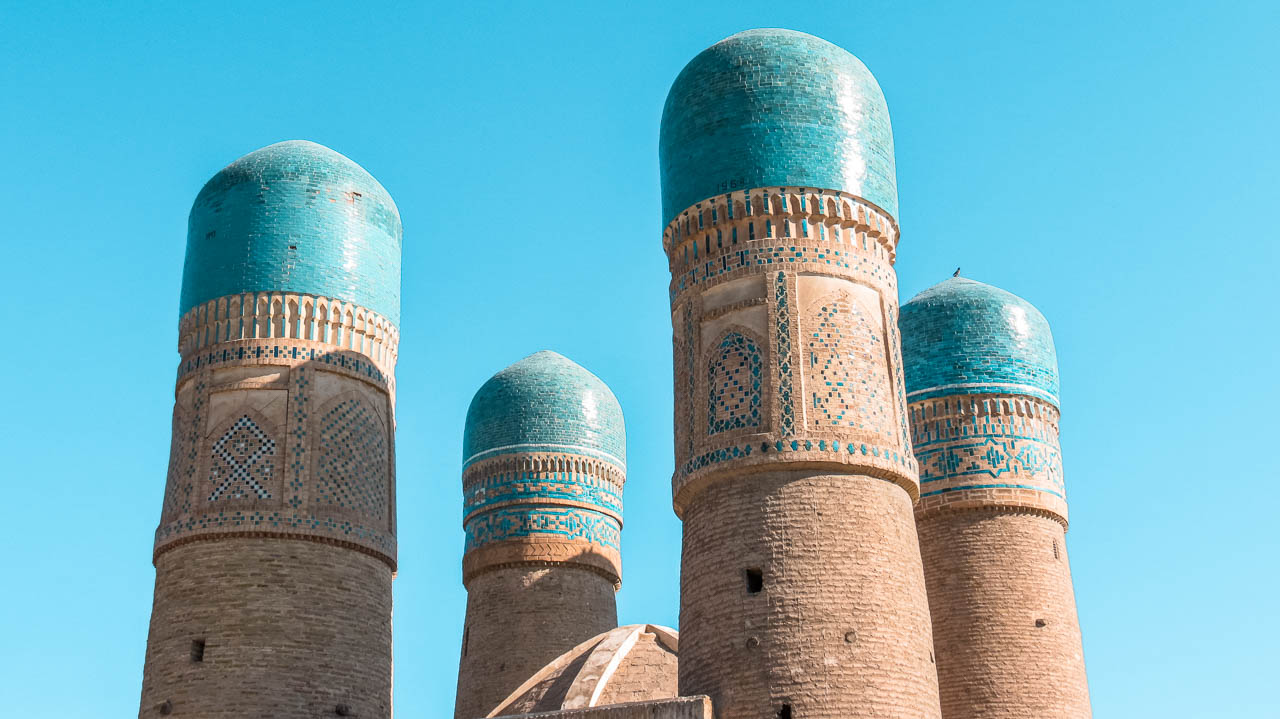
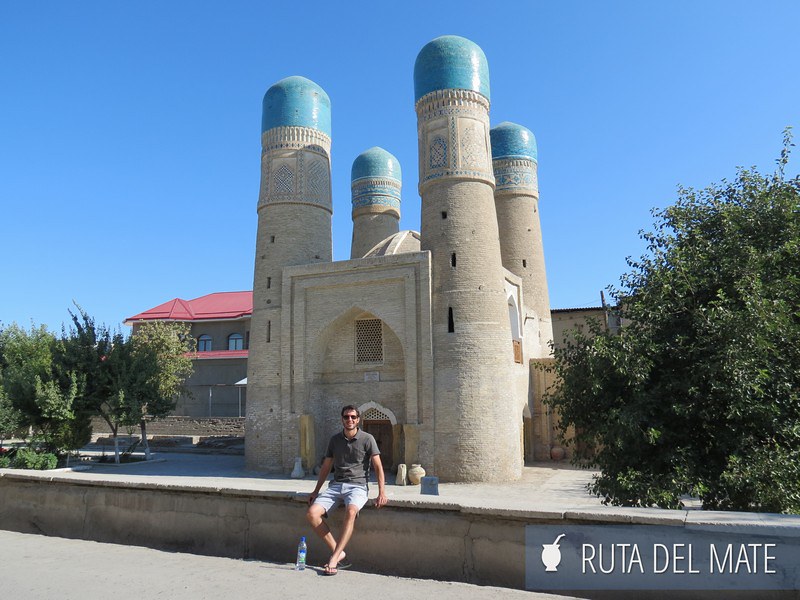
Located a little further away from the bustling Lyabi-Hauz square, Chor Minor is a haven of tranquility and uniqueness. Also it is one of the main things to do in Bukhara.
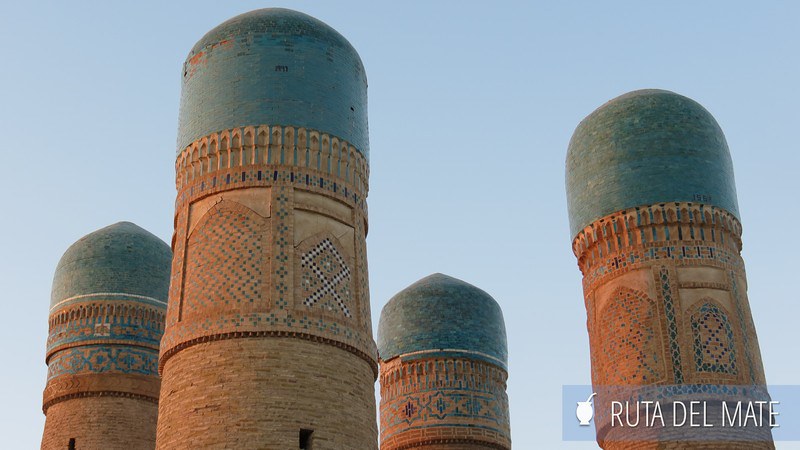
As suggested by its name in Tajik, meaning “four minarets,” Chor Minor is a unique architectural treasure. This building, characterized by its four distinctive blue towers, stands as a jewel apart from the traditional structures to see in Bukhara, such as madrasas and mosques. Although it does not allow access to its interior, its presence stands out in the city and offers an enchanting visual experience.
📝 The best photographs of Chor Minor are captured at sunset, when the sun tinges the blue minarets and the deep ochre walls with warm tones.
🔝 You may be interested in 👉 What to do and what to see in Samarkand, to complement your visit to Bukhara.
6) Lyabi-Hauz Square
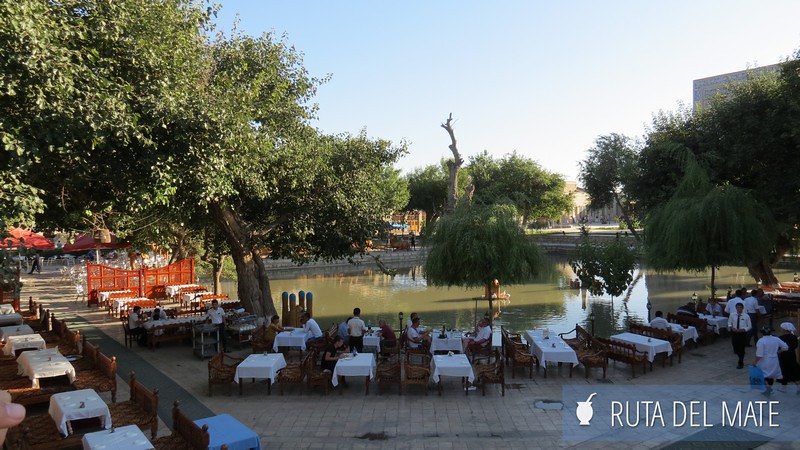
Lyabi-Hauz Square stands as an unmissable treasure to see in Bukhara. This charming corner is essential to immerse yourself in the relaxed atmosphere of the city, offering the opportunity to sit by the large central pond and enjoy a local tea or snack at one of the stalls.
The very name of the square, which means “by the pool” in Persian, invites you to enjoy it and the cool shade of the trees. Undoubtedly, an oasis of tranquility in the middle of the bustling urban life.
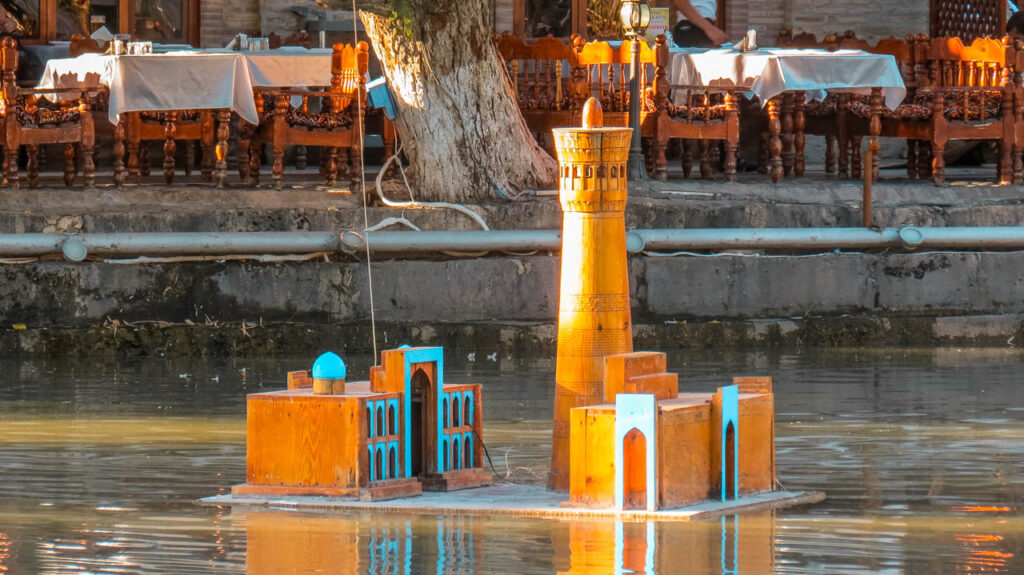
Once there, I encourage you to pay attention to details of everything going on around you: the decoration of the pond, the tourists enjoying the atmosphere, the locals who find their own meeting and conversation point and the touch of history and spirituality added by the three majestic madrasas built during the Shaybanid dynasty.
7) Madrasa of Nodir Devon Begi
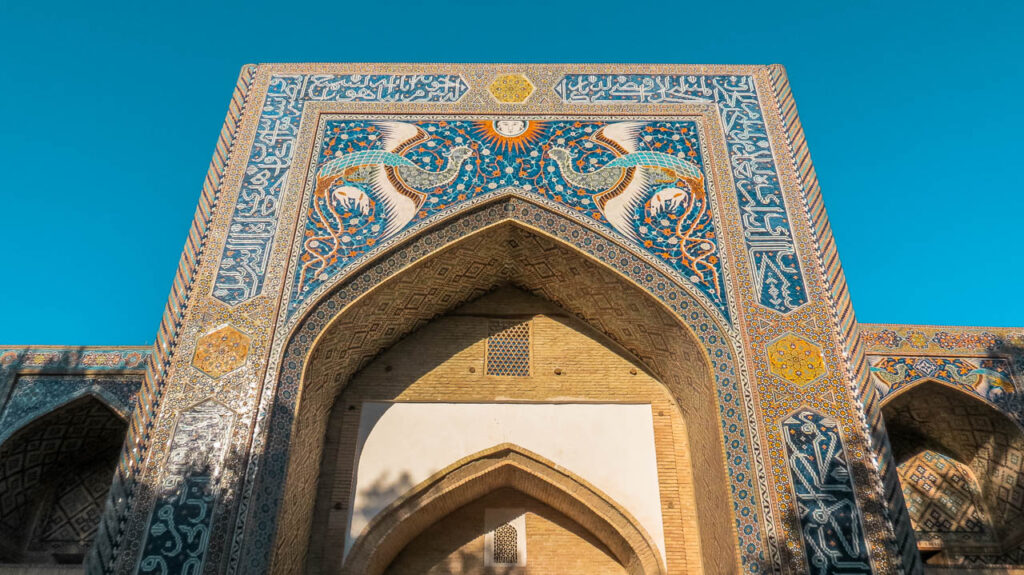
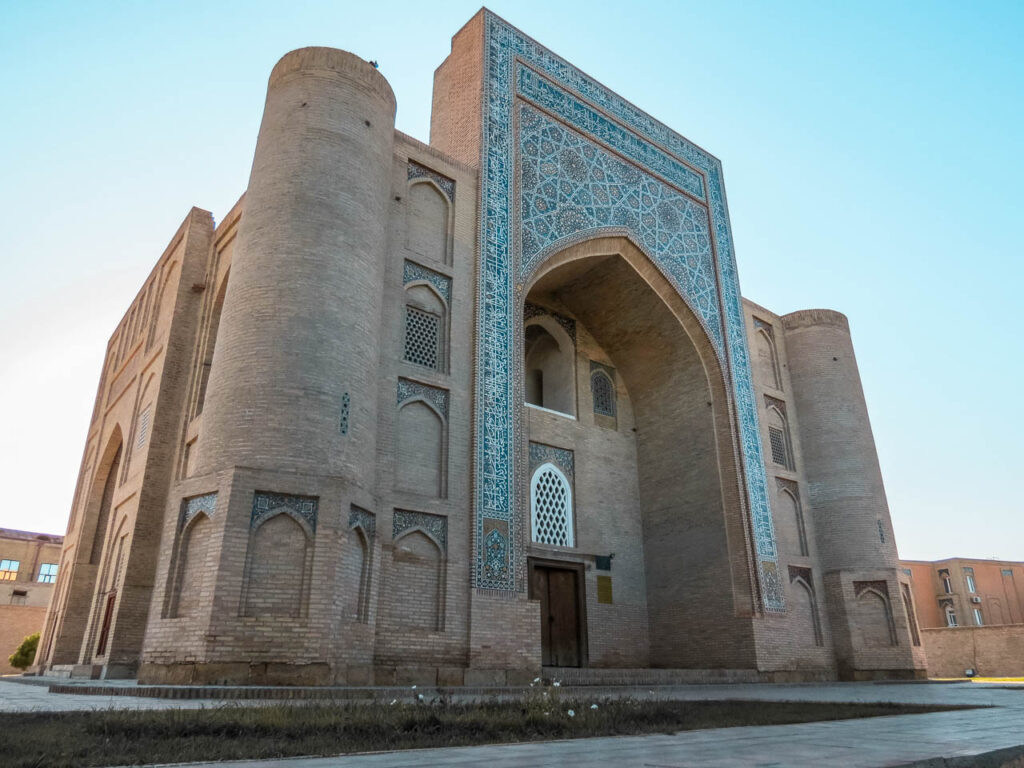
In Lyabi-Hauz Square stands out, to the east, the Madrasa of Nodir Devon Begi. It shares its space with the quiet presence of the Kukeldash Madrasa to the north and the historic Khanqa of Nodir Devon Begi to the west.
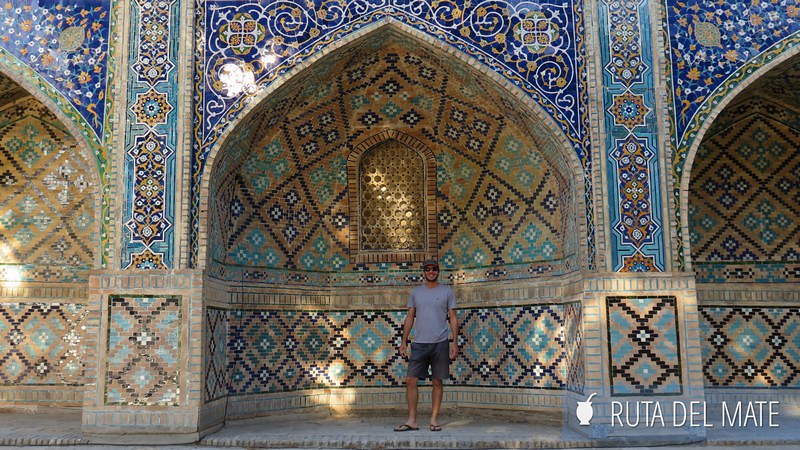
The Nodir Devon Begi Madrasa stands as an architectural testimony to Bukhara’s rich history and offers a window into its educational past, although it now houses souvenir stalls. Its intricate architectural details, such as showing a human face in the sun, and its beautiful decoration in shades of blue, green and gold, tell a captivating cultural story of the city.
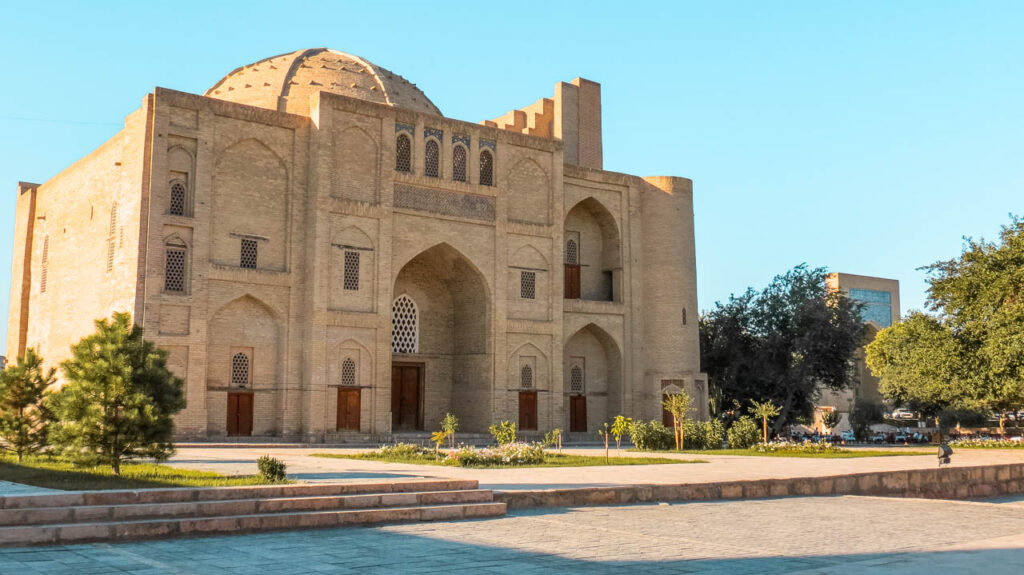
8) Janqa of Nodir Devon Begi
In front of the Madrasa of Nodir Devon Begi and to the west of the square, is the Janqa Nodir Devon Begi. A “Janqa” or “Tekke” generally refers to a Sufi shrine or spiritual meeting place, as well as accommodation for religious Muslims visiting the city.
The building has undergone transformations over time, but its elegant portal still adds a unique charm to the surroundings, reflecting in the pond in the square. The newer part of the building used to be a hammam, or public bath, and now houses a souvenir store.
9) Madrasa Kukeldash
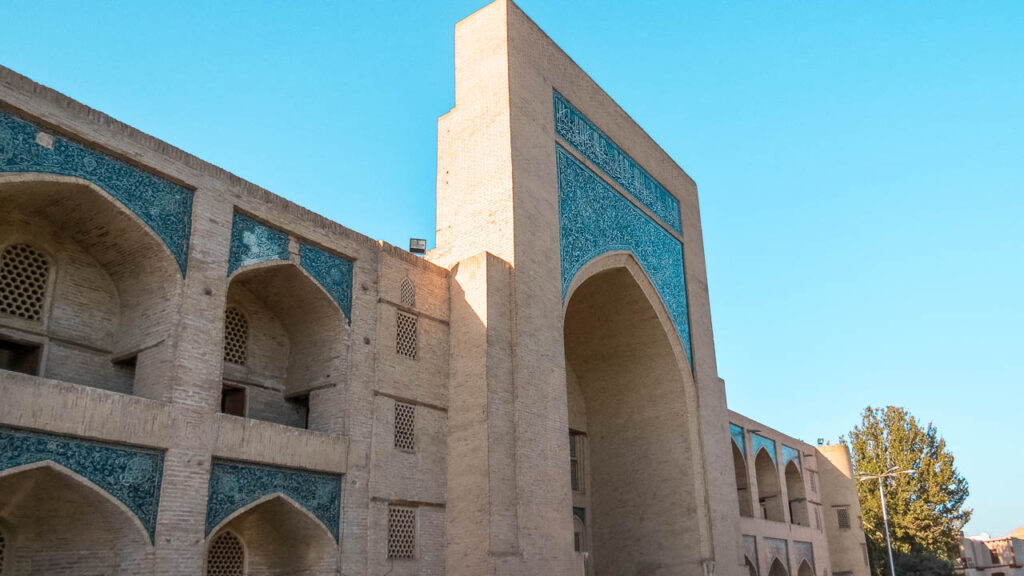
Completing the triad of madrasas is Kukeldash, north of Lyabi-Khaus Square, which stands as another example of the importance of education in Bukhara. This building is impressive for its size, and no wonder, since it became the largest madrasa in the city and one of the largest in Central Asia.
10) Statue of Khoja Nasreddin
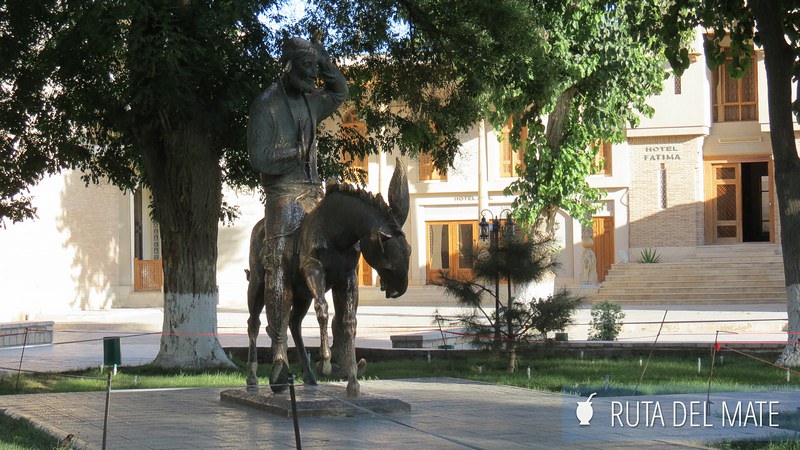
Adorning the square, the bronze statue of Khoja Nasreddin adds a touch of humor and tradition. This Central Asian folk character, known for his mischief and cunning, is a beloved figure in the region’s folk stories.
The statue, depicting this “wise fool” riding his donkey, adds a fun element to the atmosphere of the square. Besides, since he is a much-missed character, you will always see locals taking pictures with him. Don’t miss yours!
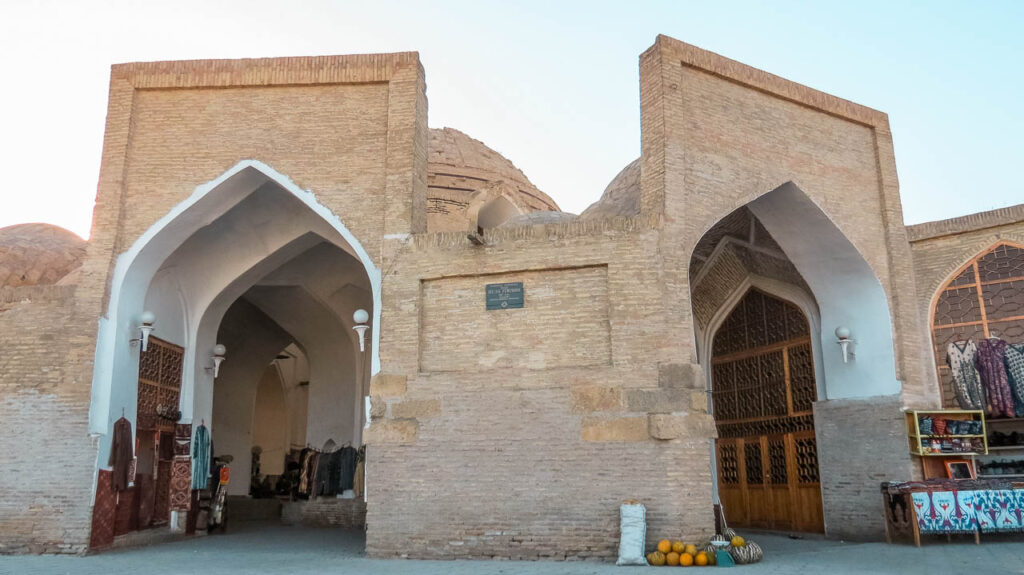
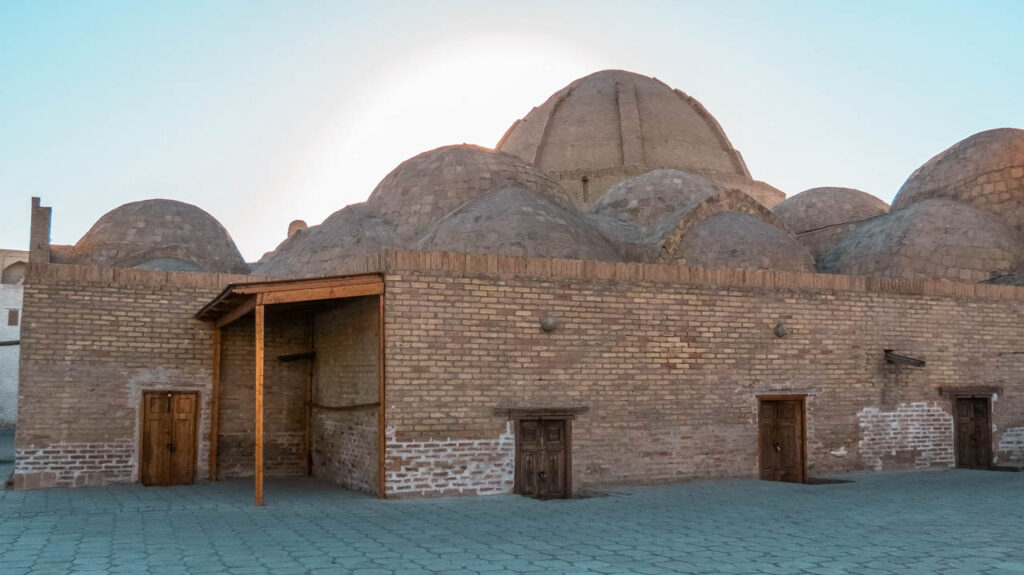
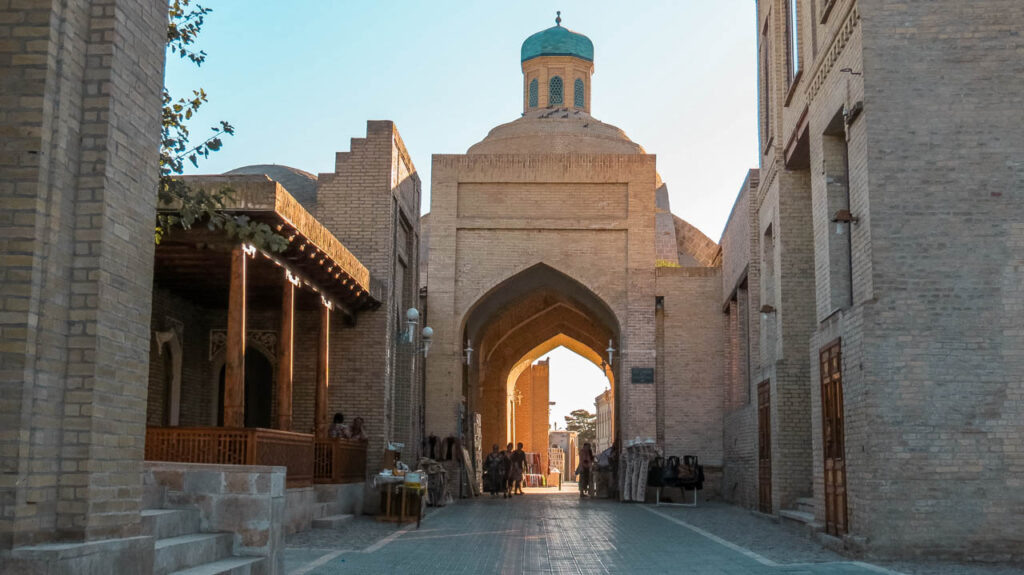
11) Covered bazaars (Trading domes)
Another thing to do in Bukhara is stroll around its covered bazaars, that began to be created in the 16th century. The city has been the epicenter of trade since the Silk Road began to become popular. Merchants from China, India, Iran, Russia and other kingdoms, empires and countries passed through here and stopped both to rest and to do business.
These bazaars are noted for their domed roofs(toqi) and, today, are a good place to buy handicrafts, carpets, clothing and souvenirs, of course. Incidentally, if you go in the middle of summer, they serve as shelter from the sun and the heat that exceeds 40 degrees.
I would like to highlight the four covered bazaars that are in the center of Bukhara:
- Toqi Telpakfurushon, means Dome of Hats and Headdresses. It was built in the 16th century and, under its distinctive dome, embroidered caps, turbans and beautiful oriental-style headdresses continue to be sold.
- Toqi Zargaron, the Jewelers’ Bazaar, once housed some 36 stores that were a feast for lovers of precious stones. Today, in addition to some delicate handicrafts, you can get more souvenirs of your trip through Bukhara.
- Toqi Sarrophon, which means Exchange Dome, was originally where the money exchange took place. Today, it has lost its function, and now offers handkerchiefs, kitchen utensils and souvenirs.
- Tim Abdullah Khan, in this dome you can get handmade carpets, scarves and silks.
Also, under some of them, there are still hamans, the Arab baths so popular in the East.
12) Madrasa Ulugbek
After walking through the covered bazaars, we came to two large madrasas facing each other, separated only by a street. Although they look similar, they have some differences between them.
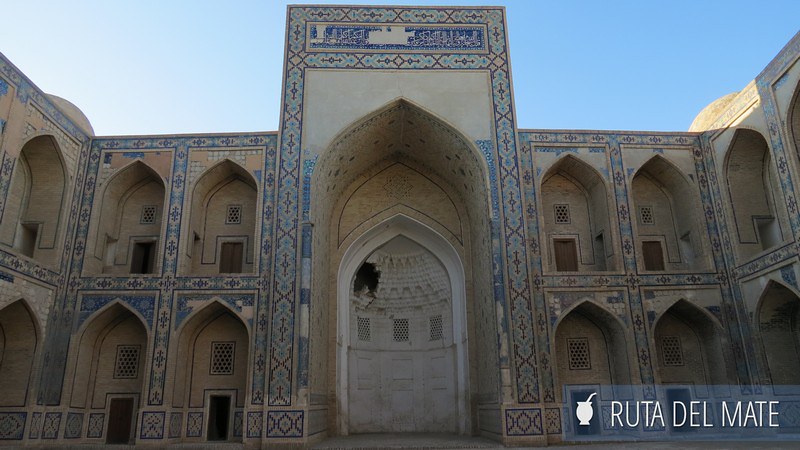
The first of these is the Ulugbek Madrasa, named after the prominent astronomer and ruler Ulugbek, grandson of Amir Timur (Tamerlane). It was built in the 15th century, during his reign, making it one of the oldest in Central Asia.
This building is known for its importance in the history of Islamic education. For, like all madrasas, it housed students of all kinds of disciplines, such as astronomy, mathematics, Arabic language and religion, who eventually excelled as in their fields.
Today, its inner courtyard is quite dilapidated (and, for a change, there are souvenir stores), which is a pity. However, one can still admire what it once was.
13) Abdul Aziz Khan Madrasa
The Abdul Aziz Khan Madrasa is another architectural jewel of Bukhara, built later than the Ulugbek Madrasa in the 17th century during the Shaybanid dynasty. This educational complex is named after the emir of the time who sent it to be built, and who wanted it to be of much greater importance, more beautiful and with more details than Ulugbek.
Indeed, a comparison between the two madrasas reveals notable differences in their architectural details. While Ulugbek’s Madrasa stands out for its balance, harmony and simplicity, Abdulaziz Khan’s Madrasa impresses with its grandeur and opulent ornamentation. But not only that, even the phrases written on the walls are different. Ulugbek presents phrases from the Koran, while Abdulaziz Khan displays poetry by famous poets.
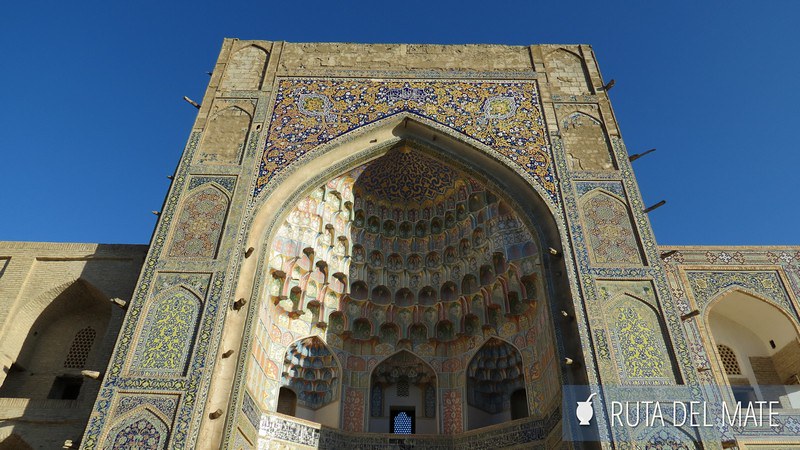
14) Ark, the fortress of Bukhara
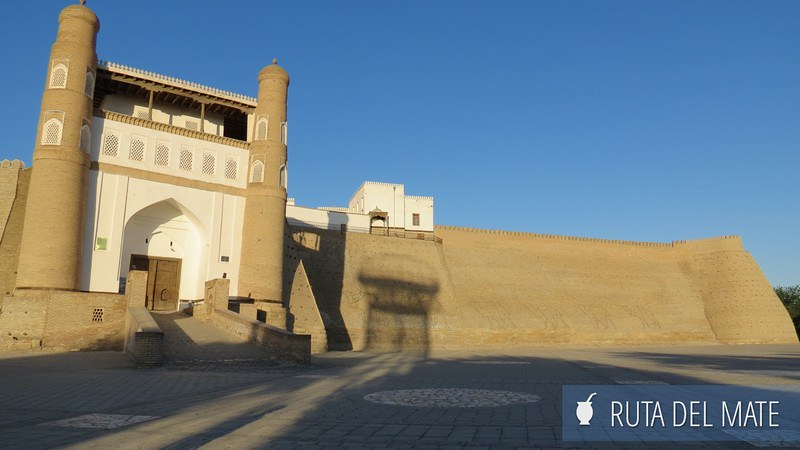
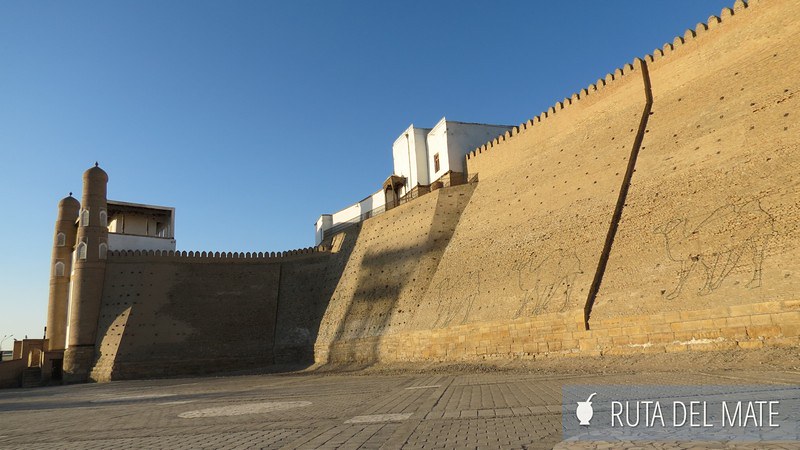
The Ark Citadel is a witness to the history and power that has dominated the region over the centuries and, without a doubt, one of the things you have to see in Bukhara. This fortified complex, believed to date back to the 5th century, has served as a political center and residence of rulers, including the Samanids, the Qarakhanids and the Khanes of Bukhara.
Although much of Ark was destroyed during the Mongol invasion in the 13th century, there are still some things to explore at this historic site, such as the Juma Mosque and some of the palace halls. The high walls that surround it are imposing and have been restored.
Visiting this fortress has given us the opportunity to immerse ourselves in the layers of Bukhara’s history and understand the influence of different dynasties in the region.
15) Shukhov Water Tower in Bukhara
This water tower was designed by Russian engineer Vladimir Shukhov, who has created the world’s first hyperboloid structures, and at a glance we can see that some of that is reflected in this tower.
While the entrance fee is somewhat expensive compared to other Bukhara attractions, you will be able to access (by elevator) a small museum and a 40-meter-high observation deck that provides panoramic views of the city and the Ark Fortress. I recommend that you go up at sunset, when the sunlight tinges the ochre colors of the surrounding buildings with orange.
🔝 Also have a look at this article 👉 What to see and what to do in Khiva, another of the spectacular cities to see in Uzkebistan.
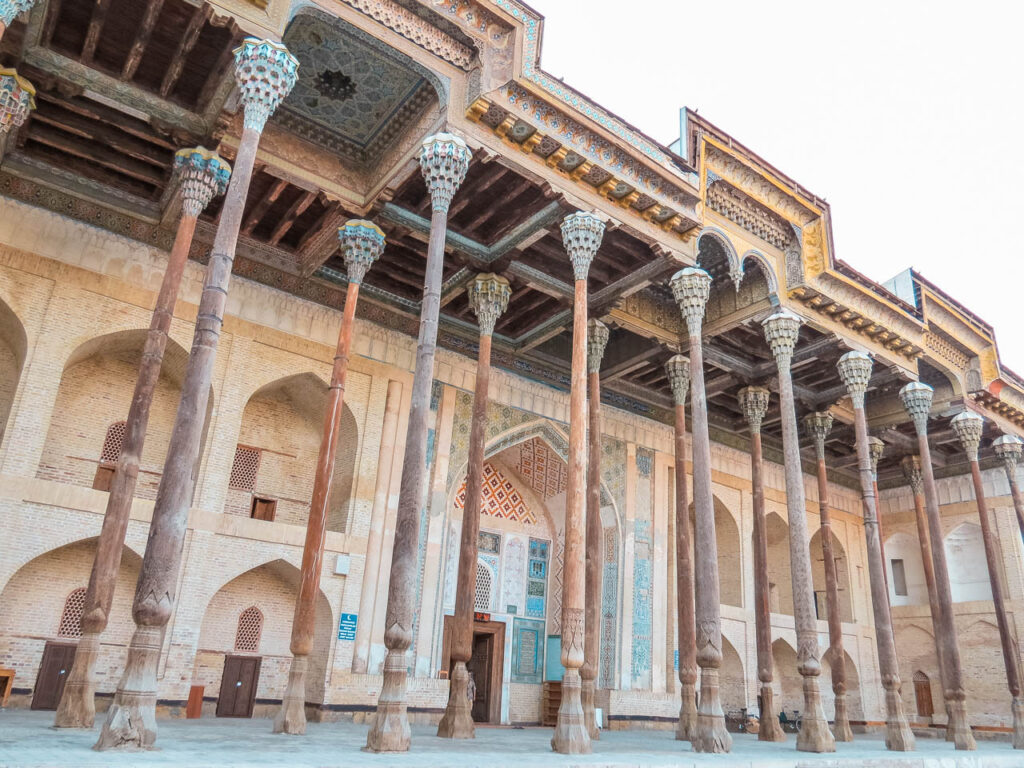
16) Bolo Hauz Mosque
A visit to Bolo Hauz Mosque is among the things to do in Bukhara, located west of the Ark Citadel. It is a beautiful architectural gem built in the 18th century during the reign of Shah Murad.
Its name, which translates as “mosque by the pond”, refers to the small square pond that adorns its entrance, creating a serene and picturesque atmosphere.
This mosque exhibits an elegant and distinctive structure featuring an iwan and an open porch whose half-timbered roof is supported by long slender columns, all decorated with floral and geometric ornamental patterns. You’ll love it as much as I do! Like all mosques, it also has a small minaret next to it.
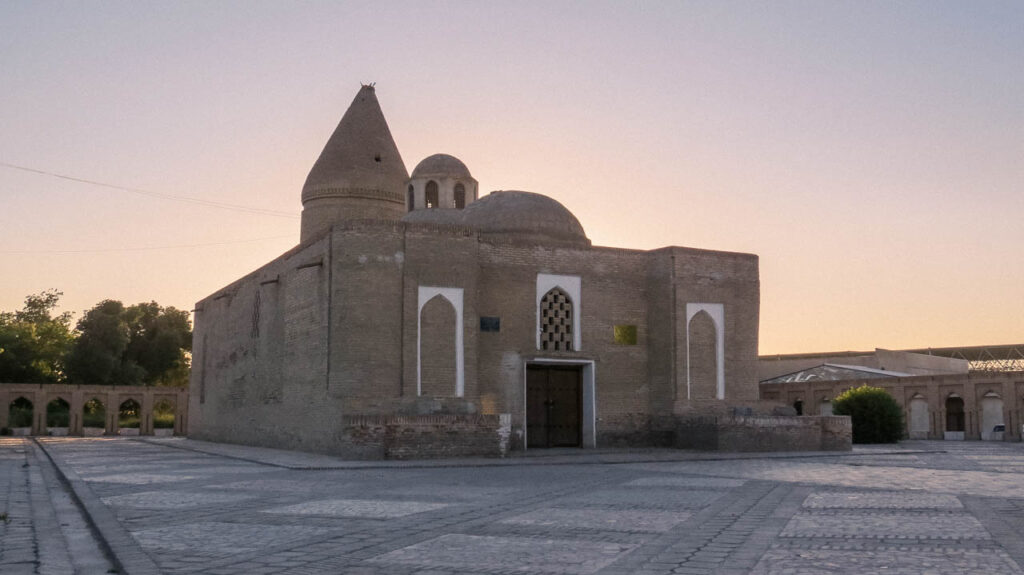
17) Mausoleum of Chashma Ayub
The Mausoleum of Chashma Ayub, built in the 12th century, is dedicated to Job, known in Islamic tradition as Ayub, a prophet revered by various Abrahamic religions. The structure reflects the architectural skill of the period, with a bulbous dome and walls adorned with beautiful tiles forming elaborate geometric and floral patterns.
The name of the mausoleum, which translates as “Job’s Spring”, refers to the legend that Ayub, with a divine touch, made water gush from the ground to alleviate his thirst. The fountain that still flows inside the mausoleum is considered miraculous and is a spiritual meeting point for those who visit it.
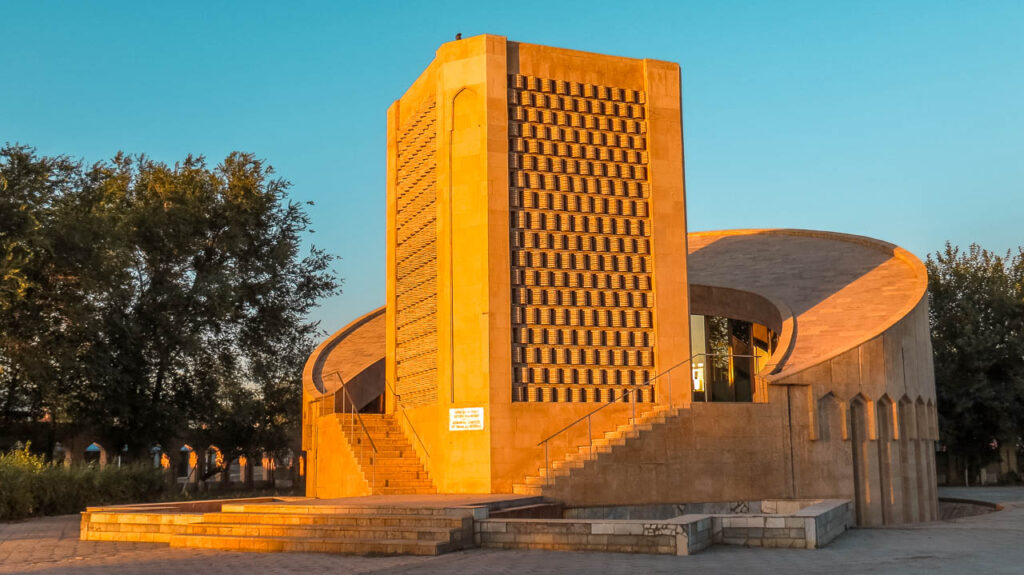
18) Imam Al-Bukhari Complex
Opposite the mausoleum of Chashma Ayub is the Imam Al-Bukhari Complex, a site of great religious and cultural importance.
This complex is one of the things to do in Bukhara as it pays homage to Imam Al-Bukhari, a leading Islamic scholar and compiler of the most respected collections of hadith (narrations) in the Muslim tradition.
The site, although small, includes a mosque, a madrasa and a mausoleum that houses the tomb of the illustrious imam.
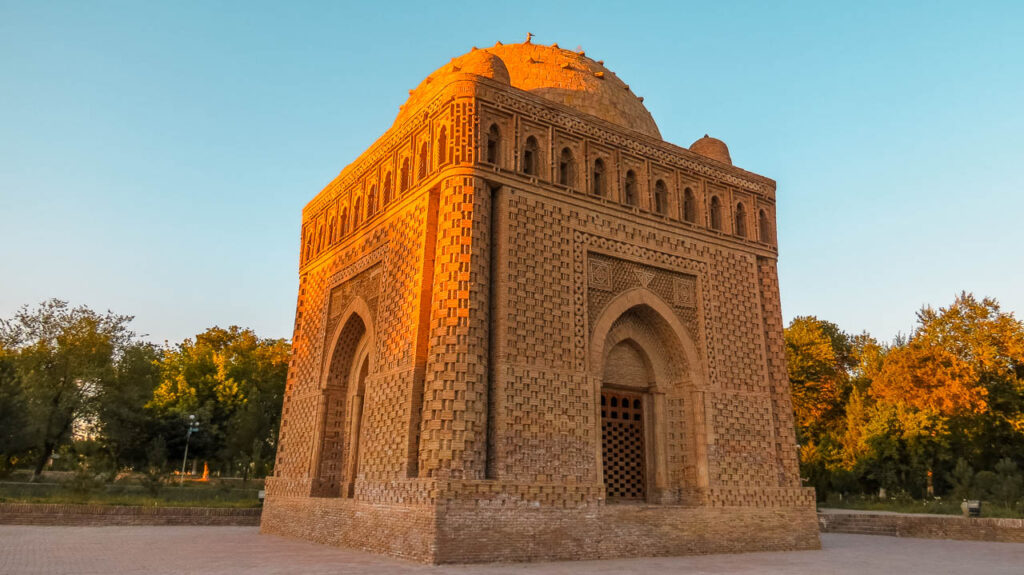
19) Mausoleum of Ismail Somoni
The Mausoleum of Ismail Somoni in Bukhara pays tribute to the memory of Ismail ibn Ahmad, one of the prominent rulers of the Samanid dynasty and an influential leader in the region during the 9th century.
Built in the 10th century, this mausoleum is a masterpiece of Islamic architecture that has stood the test of time, standing out for its elegance and details. One need only stop and pay attention to the mausoleum’s façade, which is adorned with elaborate mosaics of glazed bricks forming geometric and floral patterns.
20) Bukhara Lake
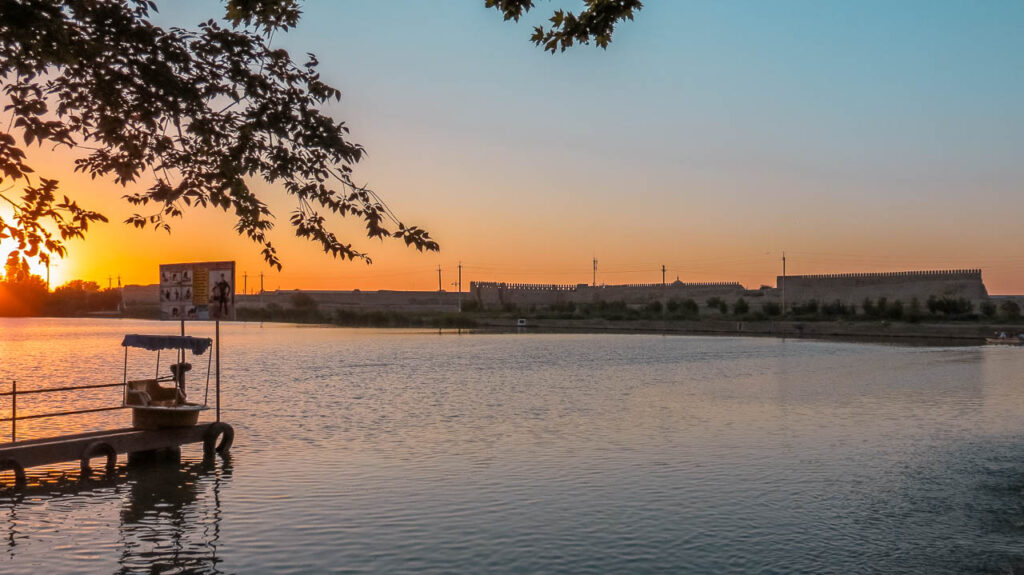
Located west of the Ismail Somoni Mausoleum, Bukhara Lake presents itself as a serene oasis, attracting local people seeking respite from the heat and a refuge from urban activity. Our sunset visit added a magical palette of colors to the skyline, with the sun dipping and tinting the historic walls that frame this quiet corner with orange tones. An ideal place to enjoy the peace and freshness at the end of the day.
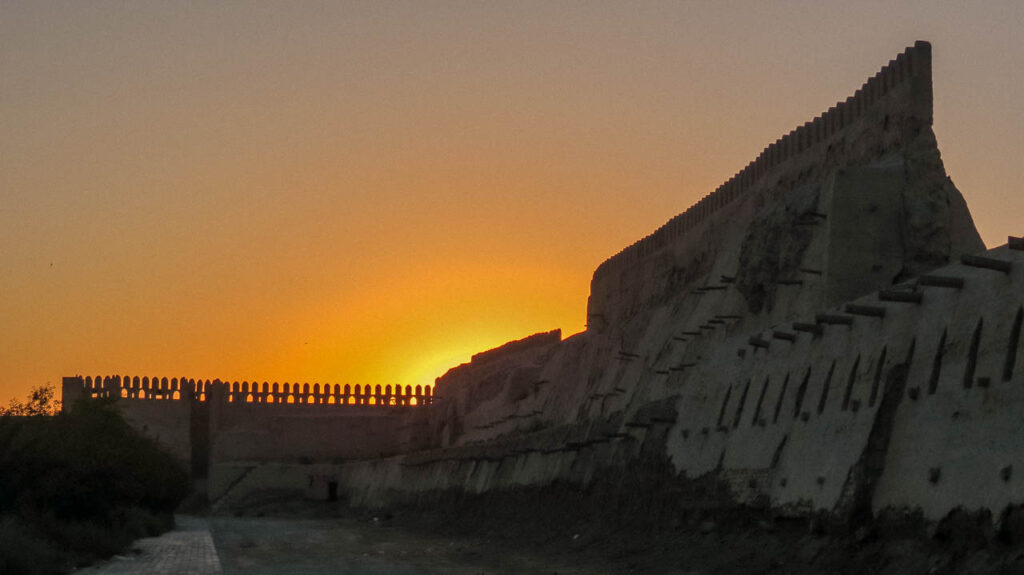
21) Walls and Talipach Gate
The Talipach Gate is a historic structure located that is an integral part of the ancient city wall and serves as a testament to Bukhara’s rich history and architectural heritage. Built during the 16th century, the Talipach Gate has witnessed countless events and changes over the centuries.
The Talipach Gate has been restored at certain periods to preserve its authenticity and provide visitors with a glimpse of the city’s ancient defensive structure. To this day, the Talipach Gate remains a landmark in Bukhara, attracting tourists and history buffs looking to explore the cultural richness of this Silk Road city.
Also, when you cross it, you can find the place where you can take shared cabs to other parts of Uzbekistan.
22) Caravanserais and hamams
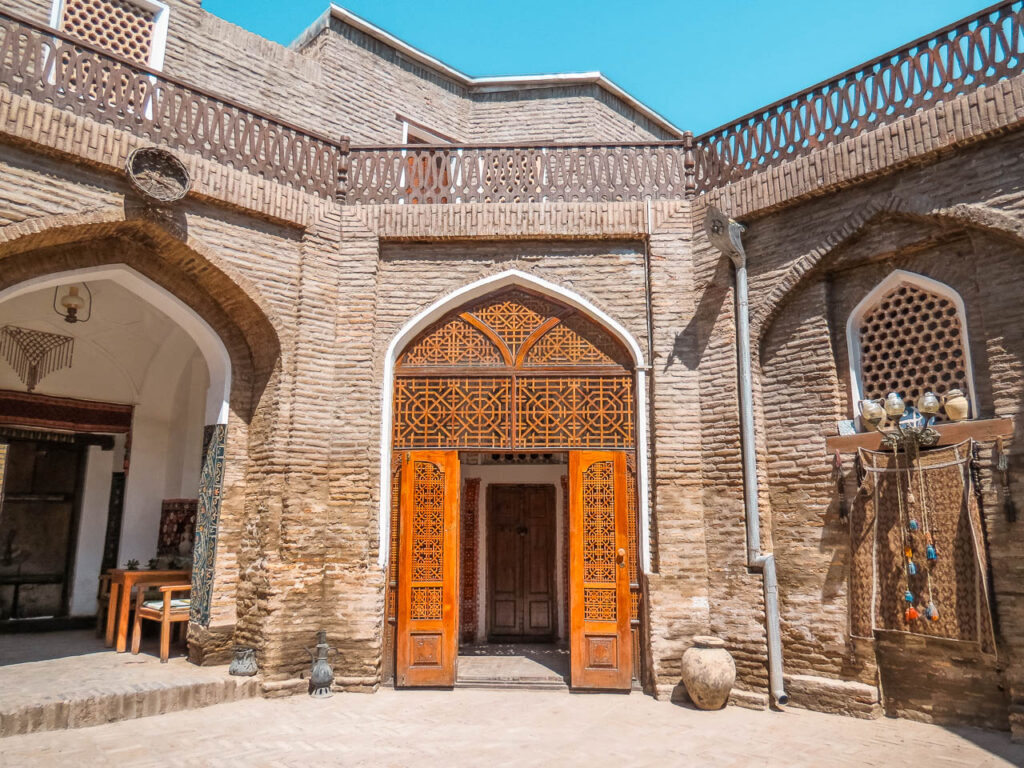
Excavations in the heart of Bukhara have revealed the fascinating remains of caravanserais and hamams, witnesses to the hustle and bustle of the Silk Road and evidence of the city’s historical importance as a key point in the ancient trade network.
The caravanserais, former meeting points for commercial caravans, are notable for their large central courtyards surrounded by rooms for merchants and travelers. Along the same lines, hamams are ancient public baths that served as social and therapeutic centers. The unique architecture of these spaces reflects a combination of functionality and elegance.
If you are passing through Bukhara, I recommend exploring the caravanserais and hamams in operation today, as it offers a unique opportunity to witness how the essence of these places has been preserved and adapted over the centuries.
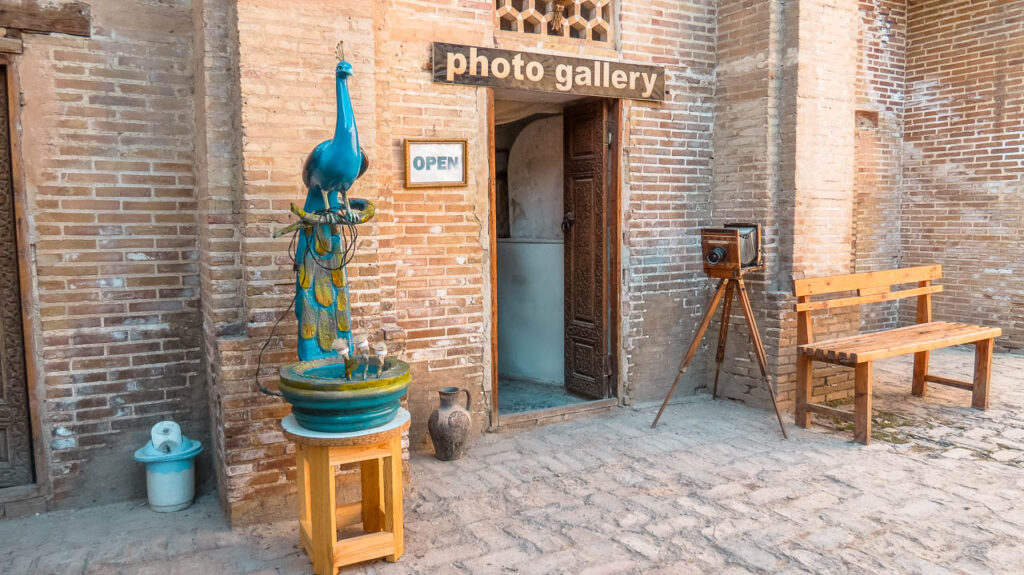
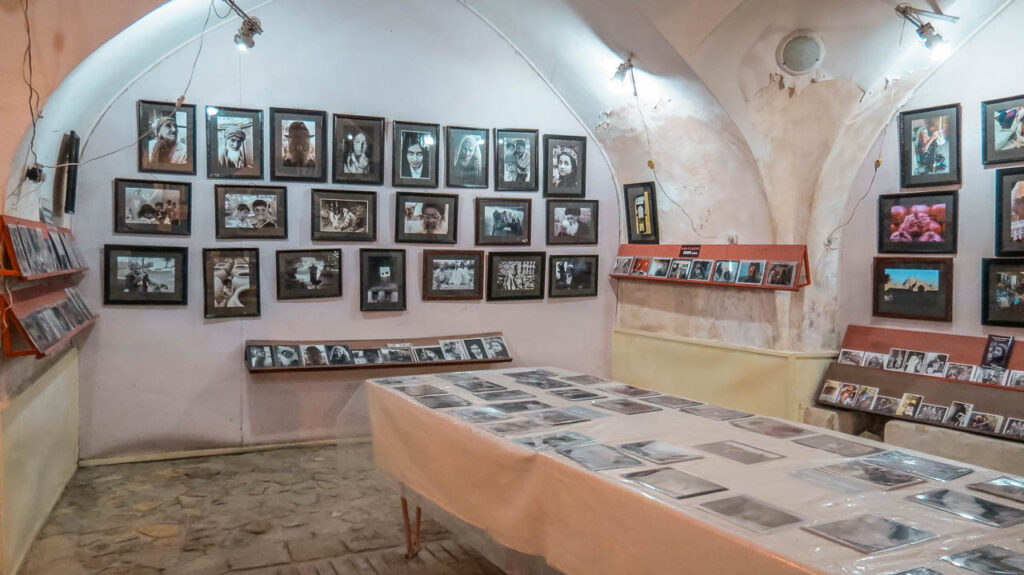
23) Bukhara Photo Gallery
The Bukhara Photo Gallery is a visual treasure that captures, through photographs, the essence and beauty of this historic city and its inhabitants.
It is a small and pleasant space, which can be visited quickly, and gives you the chance to take home an original postcard as a souvenir.
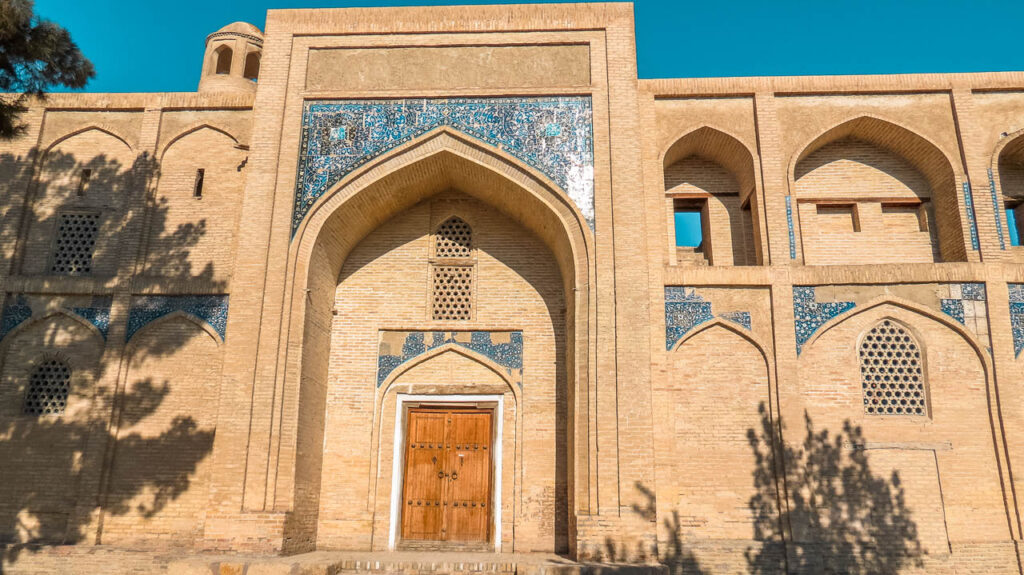
24) Khoja Gaukushan Complex
Directly opposite the Photo Gallery stands the Khoja Gaukushan Complex, an architectural and spiritual treasure in the heart of Bukhara.
Built in the 16th century, it stands as an enduring testimony to the rich cultural heritage of the region. It consists of a mosque, a madrasa and a minaret (reminiscent of Kalon), creating a serene and majestic setting.
25) Excursions to be made from Bukhara
One of the excursions you can do from Bukhara is to visit Nurata, a city founded by Alexander the Great, and spend a night in the desert of Kyzyl Kum, in a yurt, facing a lake.
🔝 If you need more information 👉 check out this article on what to see in Nurata.
📷 If you have your heart set on it, book the private 2-day Kyzyl Kum desert tour, which passes through Nurata.
Useful facts for traveling to Bukhara
Where to sleep in Bukhara?
All the things to do in Bukhara are within walking distance, so staying in the vicinity of Lyabi-Hauz Square is a perfect area so that everything is just a few meters away.
Our recommendations for accommodations in Bukhara are as follows:
- Amulet Hotel: a beautiful old caravanserai that now functions as a hotel. It is worth living the sensation of staying in a place that gave shelter to the merchants who traveled the Silk Road.
- Koh-i-noor: a few meters from Chor Minor, it is a nice family-run hotel with a fascinating decoration with local motifs. Very good breakfast and excellent service.
- Kukaldosh Boutique Hotel: within walking distance of the main square, it is a boutique hotel with new facilities, nicely decorated and an inner courtyard for a drink. It also has a restaurant.
🏨 Do you want to look for other options? Find here the best accommodation in Bukhara.
How to get to Bukhara?
To and from Samarkand
There are two options to make the journey from Samarkand to Bukhara.
- Shared cabs, which leave when full. The duration of the trip is about four hours and you have to take into account that if you do it in summer you may experience temperatures close to 40 degrees Celsius.
- Uzbek trains, you can see the frequency and prices from the official Uzbekistan trains website.
📷 If you arrive by train (or plane) and you want to be picked up to take you to your hotel, you can hire the transfers here.
To and from Khiva
Similarly, if you are in Khiva and want to travel to Bukhara (and vice versa) you have two options:
- Shared cabs, here keep in mind the same thing about the heat, especially because you are crossing the Kyzyl Kum, one of the hottest deserts on the planet.
- Private cabs, you have the possibility of hiring a private car to travel from Khiva to Bukhara (and vice versa) whose cost you can share with other travellers you meet along the way.
📷 Book in advance a transfer by private car transfer from Khiva to Bukhara (or vice versa) and enjoy from the comfort of your seat the Uzbek desert landscapes.
Did you like our article on the things to do in Bukhara? Leave us your comment!
What you need for your trips in Central Asia
Plan your trip easily with these trusted resources:
About prices
Prices can change frequently due to inflation, local conditions, or exchange rate fluctuations. The amounts mentioned in this article are indicative and reflect our visit or recent updates. It’s always a good idea to check current prices on site.


