

Discover the best things to do in Khiva, which offers a journey back in time, transporting you through the centuries with its ancient monuments, ornate minarets and imposing walls.
In its narrow alleys and ancient squares, Khiva breathes the legacy of the Silk Road. The Ichon-Qala Citadel, a UNESCO World Heritage Site, dazzles with its mosques, madrasahs and palaces adorned with beautiful architectural details.
Khiva, in English Khiva, was part of the kingdom of Khorezm, and found its position under the shadow of the prominent Konye Urgench, the capital of the kingdom located in present-day Turkmenistan.
It functioned primarily as one more stop on the vast network of the Silk Road. However, it gained importance when the Timurids seized it, reinstating Khiva’s relevance by making it the capital of the reborn state of Khorezm.
Despite its stunning beauty today, Khiva has witnessed a past marked by infamous moments. The city was long known for its slave market, where individuals from desert tribes and Kazakhstan were traded.
In the 14th century, the area was subdued by the Persians, later falling under Russian rule, which gave rise to the Soviet republic of Khorezm, although it was quickly merged with the Uzbek region.
This city is charming and peaceful in appearance, although it has lived a complex history, marked by the different dominions under which it was, each one leaving its mark on the cultural and social identity of this jewel of Uzbekistan.
🔝 You may also be interested in the guide to travel in Uzbekistan that we prepared based on our experience traveling in the country and can serve as a starting point for planning your trip.
🔝 See also our suggested itinerary for Uzbekistan in 15 days (and we’ll show you the one we did!).
MAP of what to see in Khiva or Khiva, Uzbekistan
Everything there is to see in Khiva is concentrated in the walled citadel, Ichon-Qala. It is well preserved, which makes you think when you enter there that it is the most beautiful of the 3 main cities on the Silk Road.
📷 Check here the guided walking tour in Khiva with English-speaking guide and book your place.
Clarification on tickets to visit the Khiva Citadel 2025
Currently, the situation is as follows regarding tickets to visit Ichon-Qala, the walled citadel of Khiva:
- General admission: 250,000 Uzbek soms which is for one day (about 18 euros depending on the exchange rate). This ticket is obtained at the West Gate and has a QR code that you have to present to enter the citadel and the Khiva tourist attractions that are included.
- Attractions not included in the general entrance fee and therefore payable separately are: the access to the Watch Tower of the Fortress (100,000 soms), to climb the Islam Khoja Minaret (100,000 soms) and to visit the Mausoleum of Pahlavan Mahmoud (25,000 soms plus photos).
Now, let’s clarify a few things.
When we visited Khiva, to walk inside Ichon-Qala there was no entrance fee to buy. That is, to enter and walk through the streets of the citadel. And today, this still seems to be the case, even though they would have you believe otherwise.
If you are traveling on a tight budget and don’t want to pay general admission, we recommend that you try to enter at very early or very late hours, or to try other, less touristic gates, such as the South or the North gate, or even through the Caravanserai of Allakuli Khan, because there will almost certainly be control at the West and East gates.
Anyway, I have read that there are places that try to scam tourists at the rest of the gates, putting up fences and charging a fake entrance fee that is of no use to you. If this happens to you, comment that you will call the tourist police to resolve the issue.
In any case, if you choose to buy a ticket, make sure it has the QR code, buy it only at the ticket office at the West Gate and be sure to find out what is covered and what is not, to avoid surprises, as this changes over the years.
So, is it worth buying the general admission ticket for Ichon-Qala in Khiva?
The answer, obviously, is “it depends”.
In our case, as we were on a long trip through several Central Asian countries, having visited several mosques, madrassas and mausoleums along the route, we decided to choose which sites to enter by buying tickets for each specific place. For example, we bought the entrance to the Watch Tower, which is not included in the general admission, and visited it at sunset. Also, I encourage you to read this recently posted review in Google Maps.
But I also think that if it is your first time to Uzbekistan and any Central Asian country, it is your vacation and you have an adequate budget, I think it is worth buying the general admission ticket and visit, in addition, what you have to pay outside.
1) Ichon-Qala (Itchan Kala) or the walled city
Ichon-Qala, the historical core of Khiva, is an architectural treasure that transports you through centuries of splendor, tradition and history.
It is a walled citadel that houses an impressive collection of mosques, madrassas and ornate palaces. Elaborate tiles, decorated domes and slender minarets are the architectural details that you will find walking through the cobblestone streets of Khiva. And all this is intermingled with the comings and goings of the locals and the traditional craftsmanship of the souvenir stores.
Ichon-Qala, with its timeless charm, where past and present converge, is in an excellent state of preservation, which is why, for us, it was the pretty girl of Uzbekistan.
✅ Ichon-Qala is a Unesco World Heritage Site.
📝 Access to Ichon-Qala is free of charge.

2) Access gates to Ichon-Qala
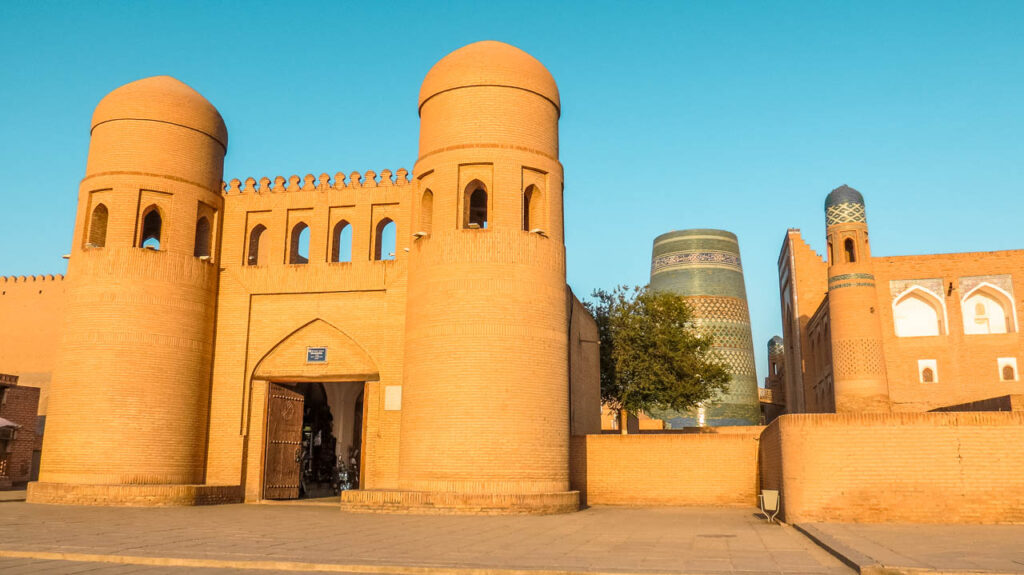
Each of the gateways to Ichon-Qala, the historical center of Khiva, has its own charm. I’m sure you will see that everywhere it is called Ota Darvaza, etc. Darvaza is Uzbek for door.
- Ota Gate (Father’s Gate): Located west of Ichon-Qala, it is the main entrance to the citadel. This is where you can get your general admission ticket.
- Bakchan Gate (Garden Gate): Located north of Ichon-Qala.
- Polvon Gate (Hero’s Gate): This gate is located to the east of the citadel. It is another tourist gateway.
- Tash Gate (Stone Gate): Located south of Ichon-Qala, this gate is named for being made of stone. It offers a more solid and fortified appearance compared to the other entries.
Just as a reminder, at both the west and east gates, you will most certainly be asked for an entrance fee, when touring the interior is free of charge. Therefore, try to enter from the north or south and you may not have any major problems.

3) Kalta Minor Minaret
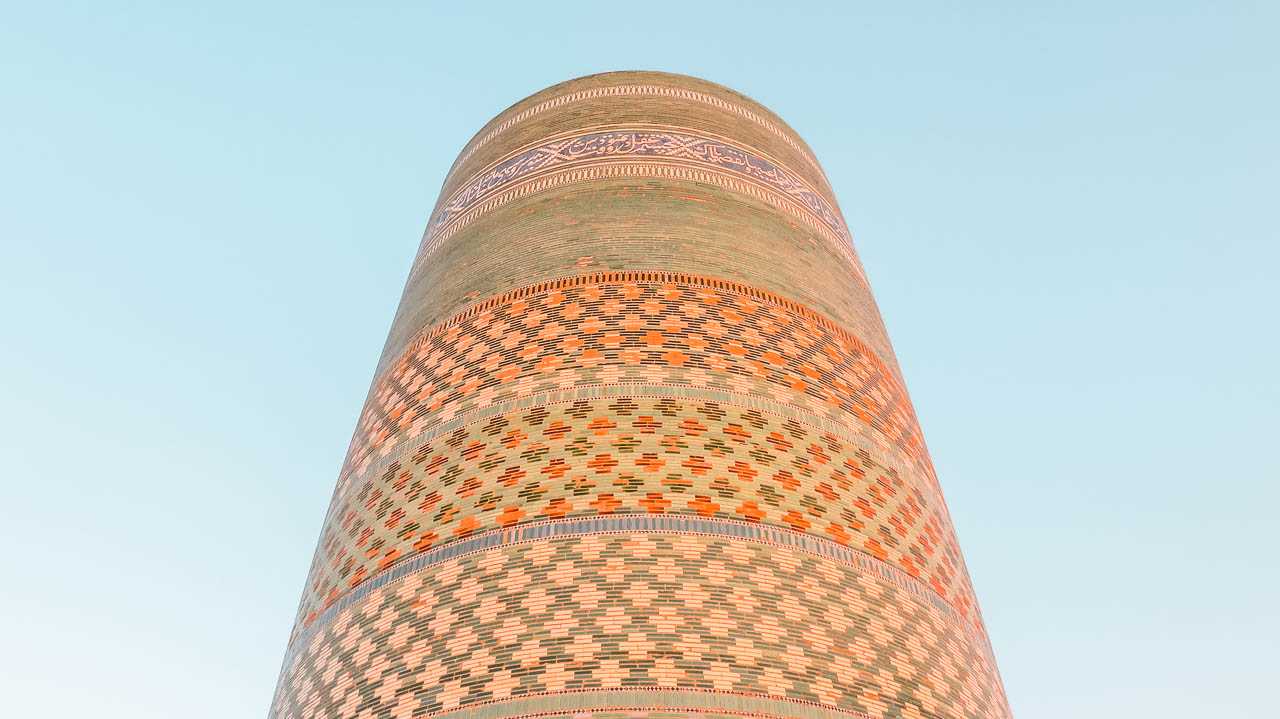
The Kalta Minor Minaret stands majestically in the heart of Khiva and, although unfinished, looks imposing. It is a rather unique structure, as its design was originally intended to be the tallest minaret in Central Asia. It was to be about 70 meters high, however, it was left unfinished at 29 meters, with a beautiful mosaic of colored tiles at its base.
Its name literally translates as “short or low minaret”.
✨ According to legend, Mohammed Amin Khan commissioned the construction of the minaret in 1851 with the ambition to be able to overlook the city of Bukhara from the top. However, Mohammed’s assassination just a couple of years later left the work unfinished. Although there is speculation that, had it been completed, the minaret would have been one of the tallest structures of its time, the reality is that, even completed, it would not have been able to see Bukhara from that distance.
With its distinctive turquoise blue, yellow and green design, Kalta Minor has become an iconic sight to see in Khiva, an artistic testament to ambition and architectural prowess.


4) Mohammed Amin Khan Madrasa
Right next to Kalta Minor and a few steps from the west gate, the Mohammed Amin Khan Madrasa complements this architectural scene. Built in the 19th century, it is a clear example of Islamic architecture.
In its time, it was the largest madrasa in Khiva and one of the most important in all of Central Asia. There were a large number of rooms or cells for students who came to study, which today have been refurbished to function as a luxury hotel.
🏨 Do you want to spend some dreamy nights in this madrasa converted into a hotel? You can make reservations at the Orient Star Khiva here.

5) Kuhna Ark fortress and watchtower
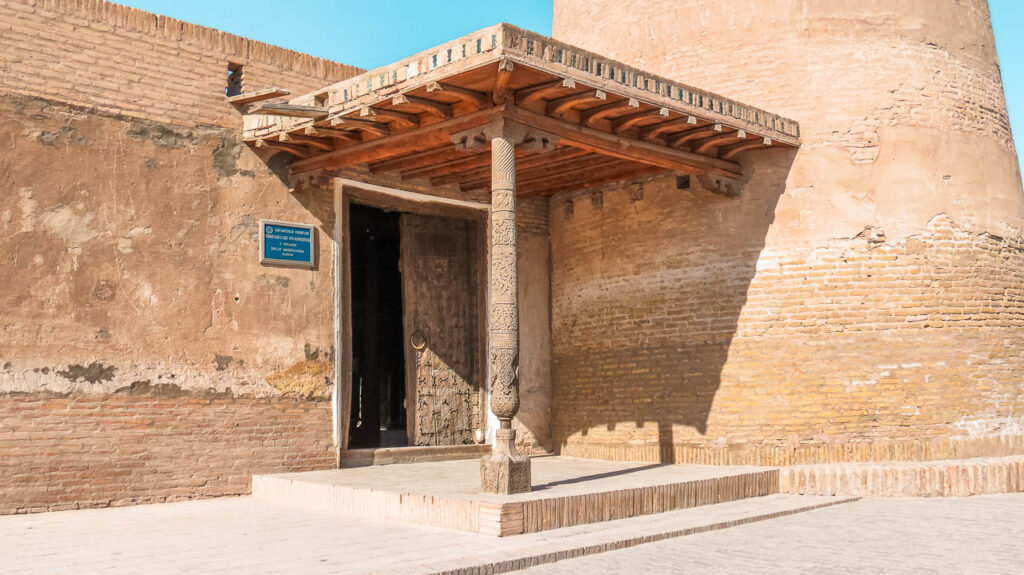
The Kuhna Fortress of Khiva, also known as the Kunya-Ark architectural complex, was built in the 17th century.
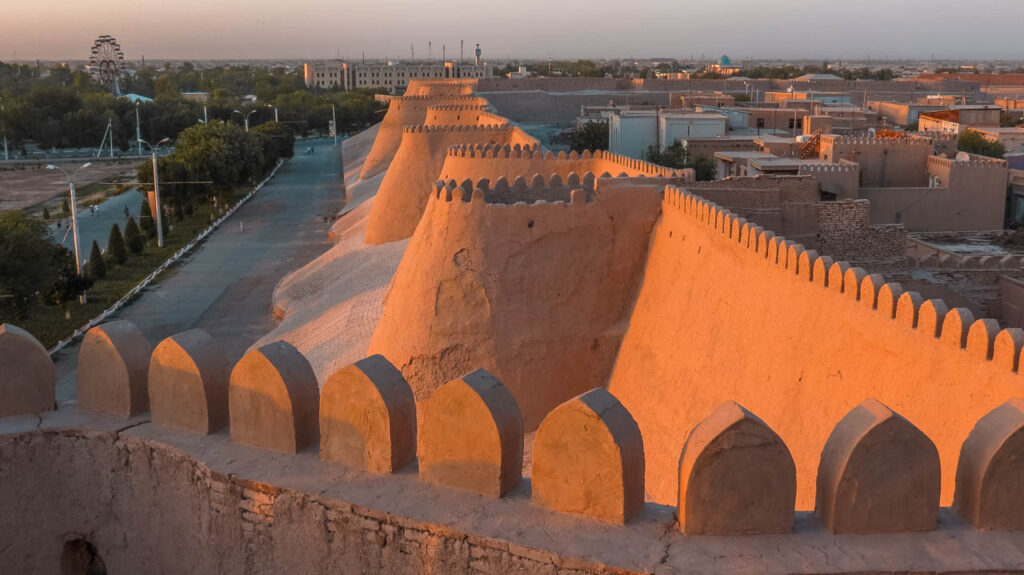
Inside was the palace of the khans, the royal residence, which reflected the daily life and power of that historical period. At the same time, with its defensive walls and watchtowers, it shows its function as a protective bastion in times of conflict and stands as a symbol of authority and prestige. Within the rooms, there was a stable, an arsenal, barracks and a jail.
We climbed the Oq Shihbobo tower (watch tower) from where we watched the sun set over the city and the walls. Idyllic.
📝 Access to the Fortress is included in the general admission. However, there is a separate fee to climb the Watch Tower. It costs 100,000 sums (about 7.50 euros, which some find abusive compared to the general ticket price.
6) Juma Mosque
The Juma Mosque, whose name translates as“Friday Mosque,” is known to be a particularly significant gathering place for communal prayer on Fridays, the holy day in the Muslim religion.
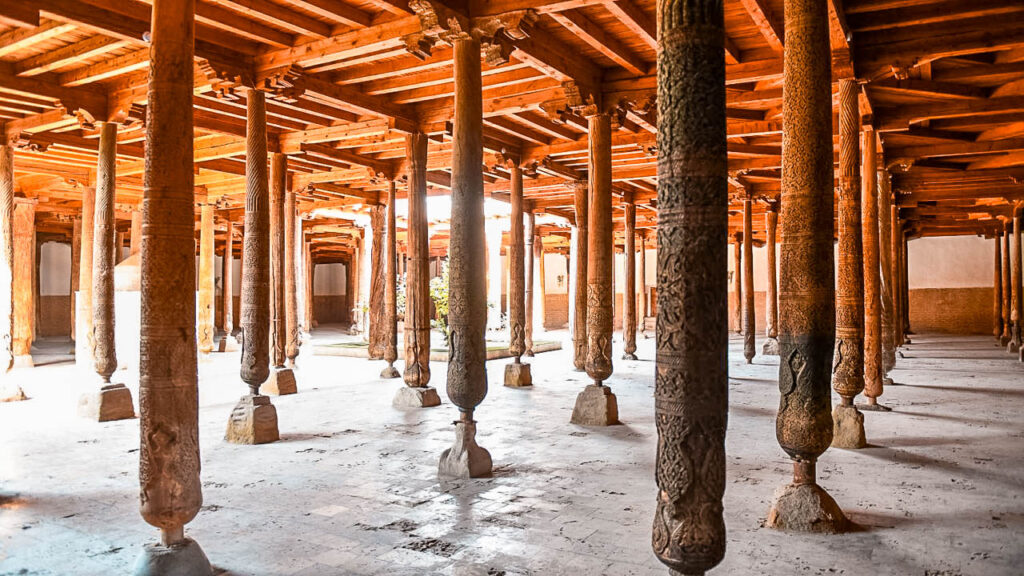
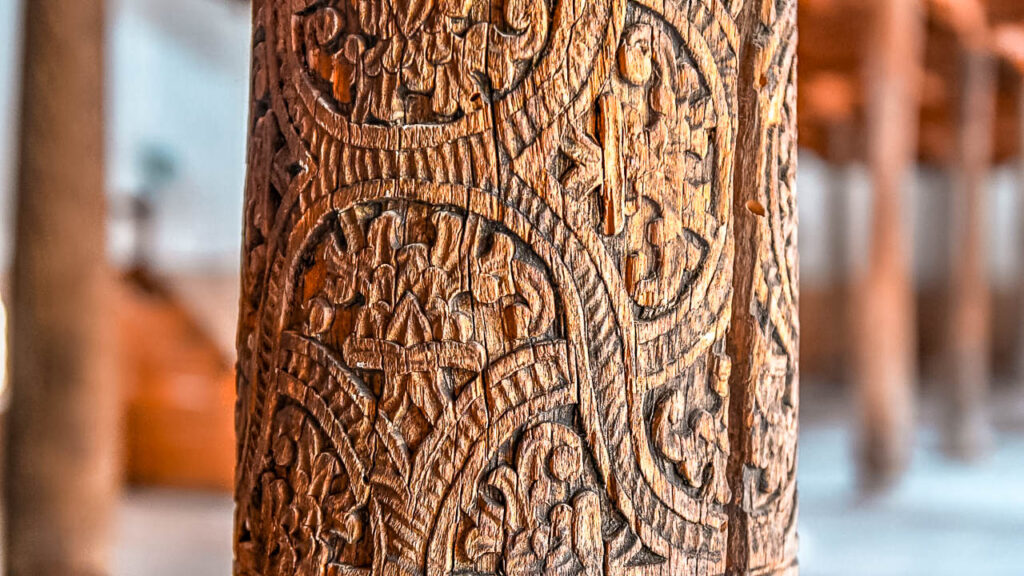
Its structure dates back to the 10th century, but has undergone multiple renovations over the years. Unlike other Islamic mosques, it does not have an inner courtyard, but instead, a large hall with more than 200 splendidly carved wooden columns supporting the ceiling, creating a unique and cozy atmosphere.
📝 Access is included in the general admission.
7) Islam Khoja Minaret
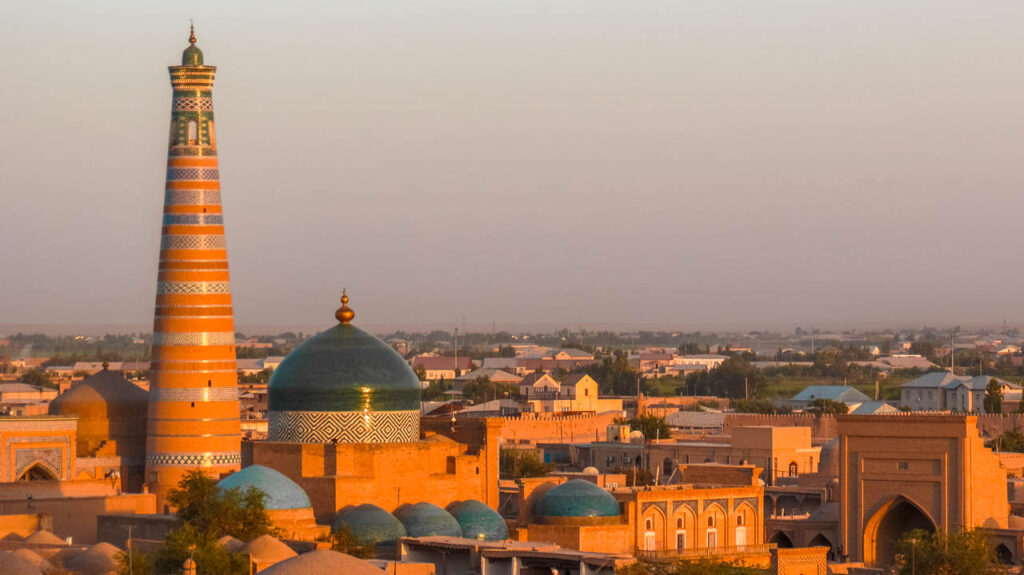
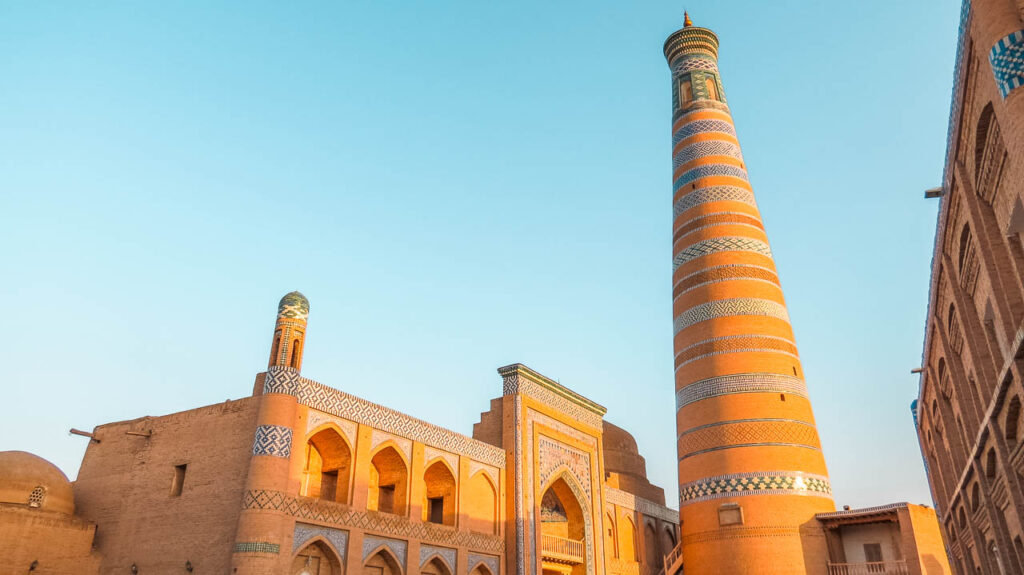
Built in the 19th century, the Islam Khoja Minaret, named after the Prime Minister of the Khanate of Khiva, stands out as the tallest structure in the city. It offers breathtaking views from its summit to those who venture to the top.
Next to it is the Islam Khoja Madrasa, which houses the Khorezm Museum of Applied Arts, with an exhibition of carved wooden objects, tapestries and local clothing, among others.
Climbing the minaret not only involves unsheathing a few Uzbek soms, but also preparing to ascend more than 40 meters up a spiral stone staircase. As you move upwards, the steps and space become progressively smaller, which can be challenging, especially with the congestion of people going up and down.
Those with a fear of heights or claustrophobia are advised to reconsider climbing or refrain from doing so. However, reaching the top rewards you with unique views. The Islam Khoja Minaret is another of the distinctive symbols to see in Khiva.
📝 The private ticket to climb the minaret costs about 100,000 Uzbek soms (a little less than 10 euros).
8) Mausoleum of Pahlavan Mahmoud
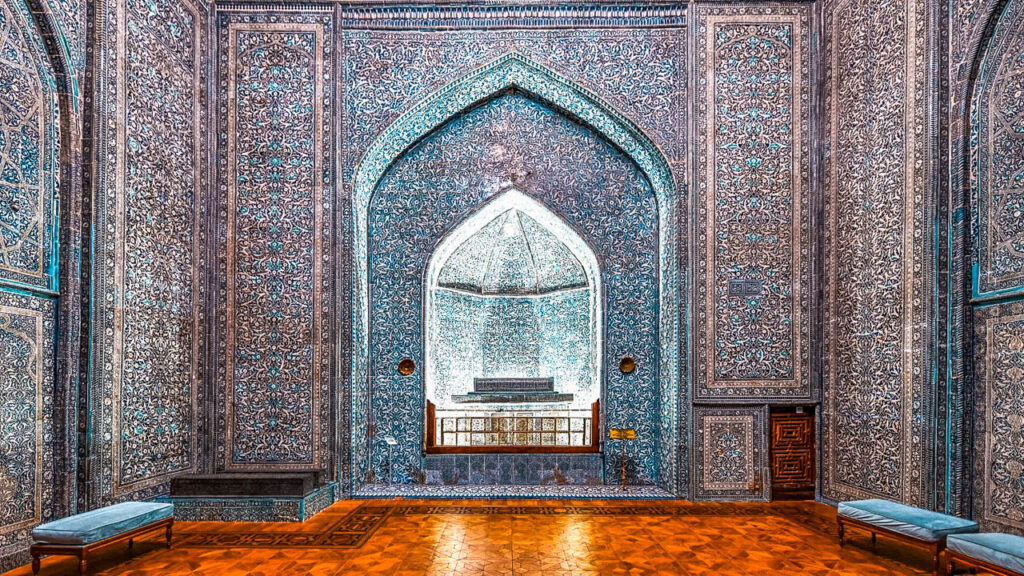
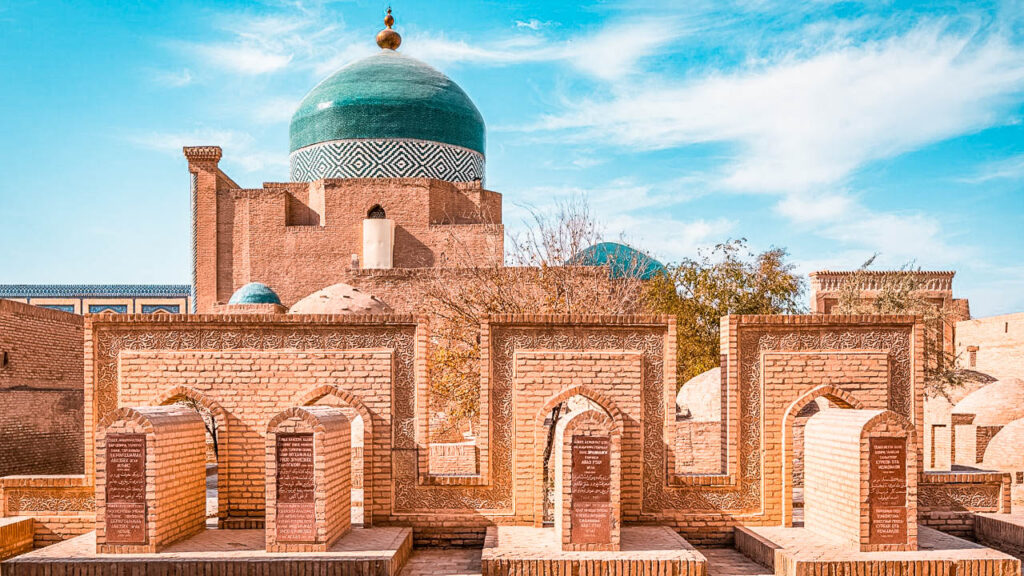
The Pahlavan Mahmoud Mausoleum honors a significant figure in the history of Khiva. This shrine, erected in the 14th century and renovated over the years, pays tribute to the local hero Pahlavan Mahmoud, an outstanding poet, fighter and Sufi saint.
As one enters the mausoleum, the tile designs and Arabic inscriptions of unique beauty stand out. The shrine houses the tomb of Pahlavan Mahmoud, and is considered a sacred site.
📝 Access is not included in the general admission. It costs about 25,000 sums (about 2 euros) and if you want to take a photograph or film you have to add about 15,000 sums more for each permit.
9) Tash Khauli Palace
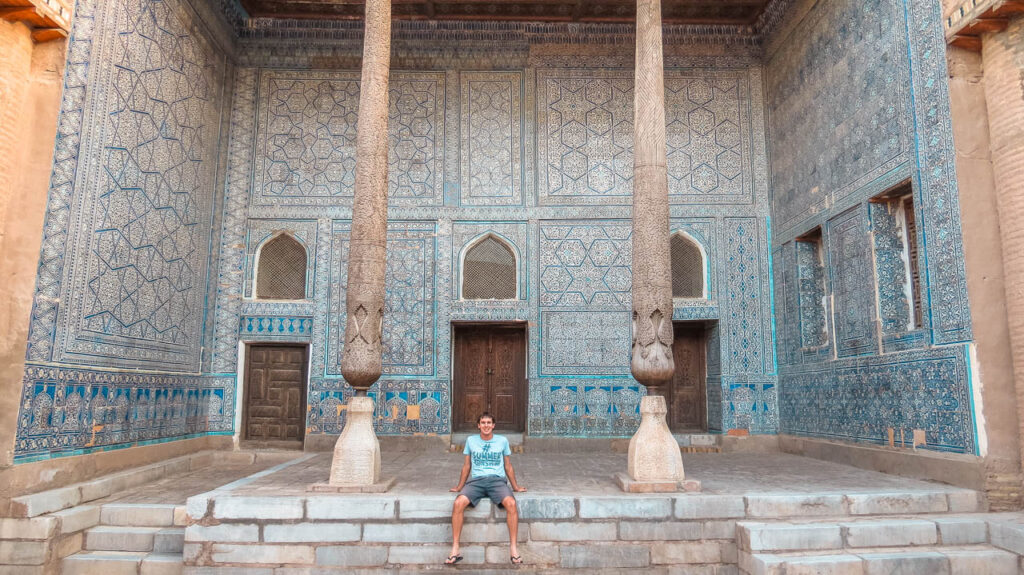
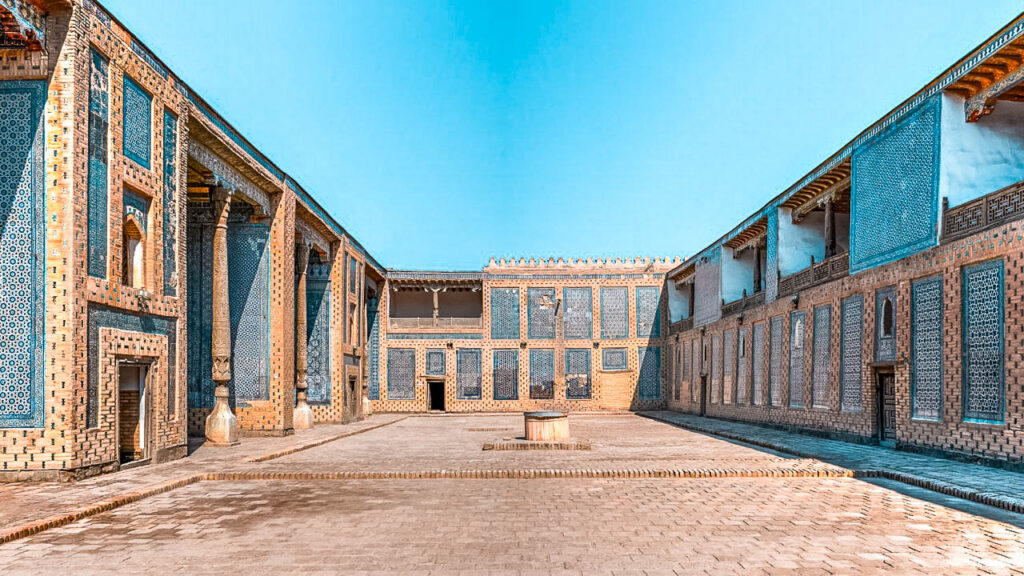
The Tash Khovli Palace, meaning Stone Palace, was built by order of the Khan of Khiva, who resided there, along with his relatives and brothers, for about forty years in the mid-nineteenth century.
It consists of a building with three courtyards, each with a defined purpose. The southern courtyard, Arz-Khovli, served as a reception courtyard, while Ishrat-Khovli was intended for entertainment activities. The northern part of the palace housed the harem. This architectural complex is connected through intricate labyrinths of corridors linking the courtyards and buildings. Among its rooms, the throne room, where the Khan received his guests, and the rooms for the women of the harem stand out.
📝 Access is included in the general admission.
10) Other sites you will see walking around Khiva (gallery)
Allakuli Khan Madrasa and caravanserai
Today a restaurant operates inside. Inside the Caravanserai there are souvenir stores where you can buy your souvenirs of the trip.
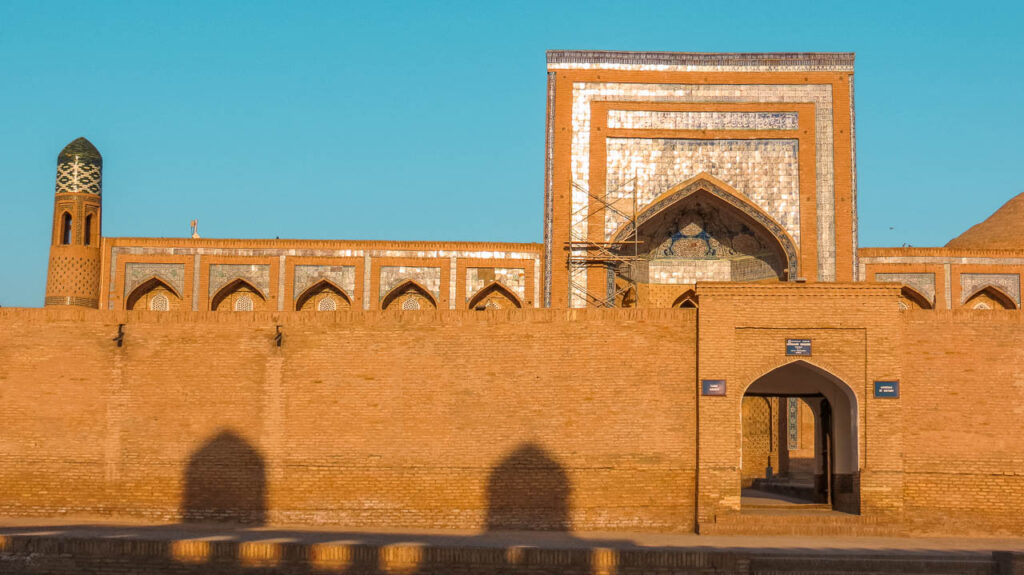
Amir Tora Madrasa
Built at the end of the 19th century, today the exposed brickwork is painted white, which makes it more picturesque, although it is still a rather simple madrasa in terms of decoration.
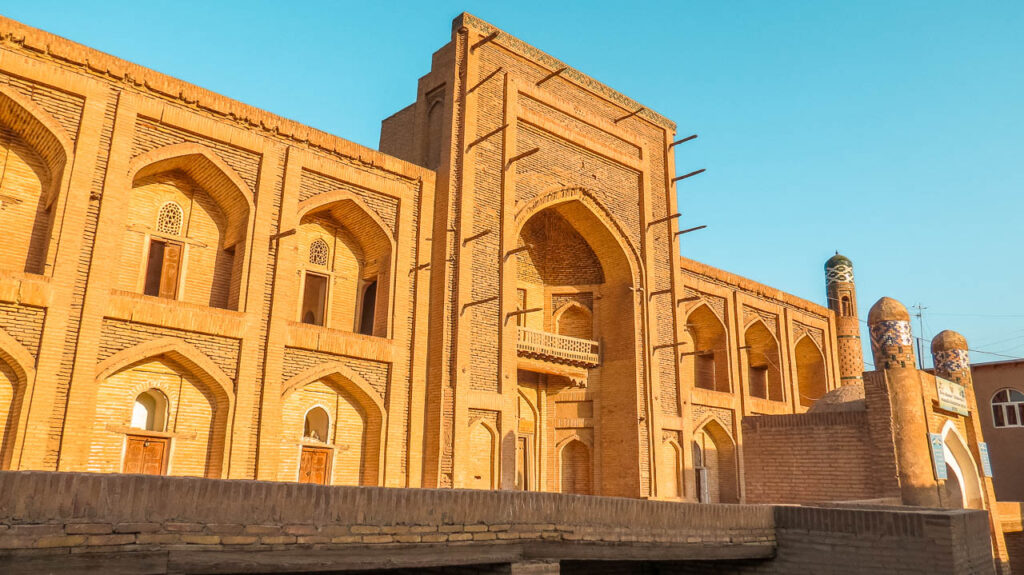
Qozi Kalon Madrasa
It is a small madrasa that houses a museum of local Uzbek and Khorezm music. You can listen to examples of local songs there.
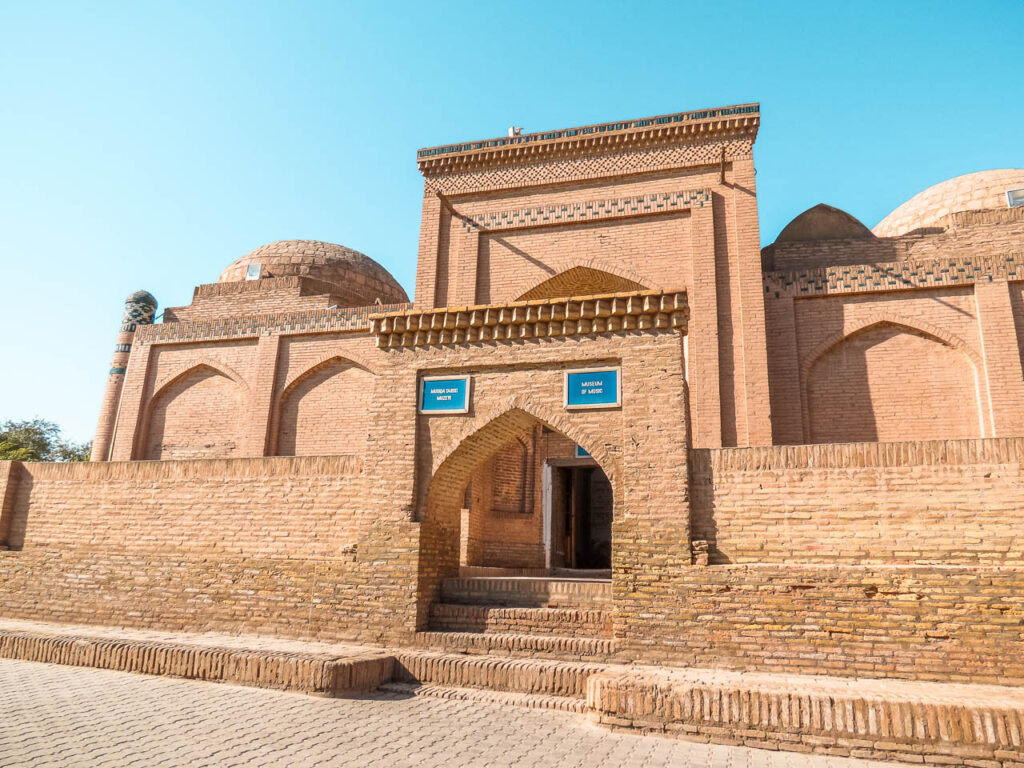
Madrasa Khoja Bardibaye
This mosque stands spectacularly in the Ichon-Qala citadel of Khiva and is one of the oldest in the city, dating back to the late 17th century.

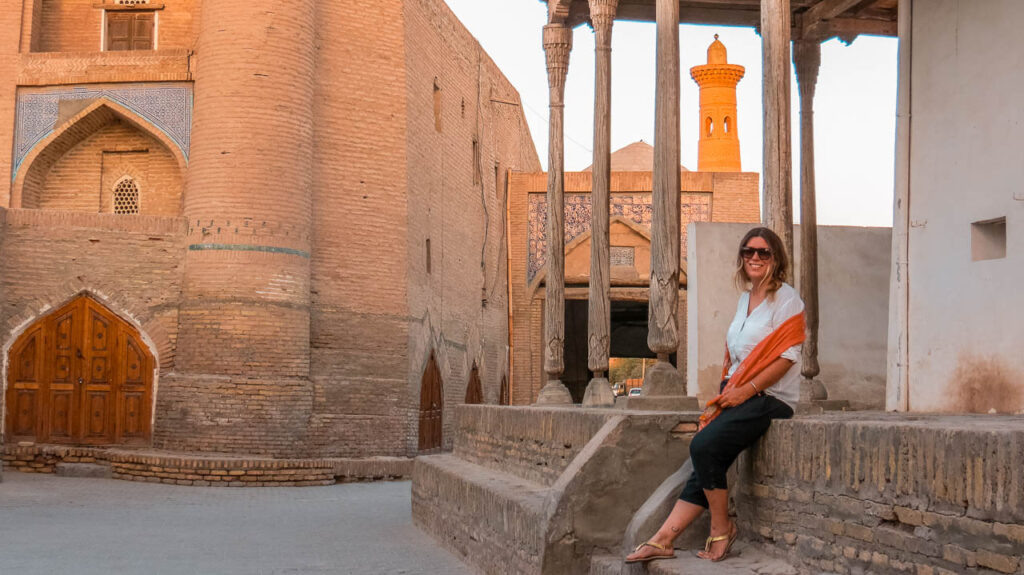
Oq Mosque
It means white mosque and can go unnoticed among the street stalls. It is very simple, highlighting the slender columns of its facade that support the entrance roof.
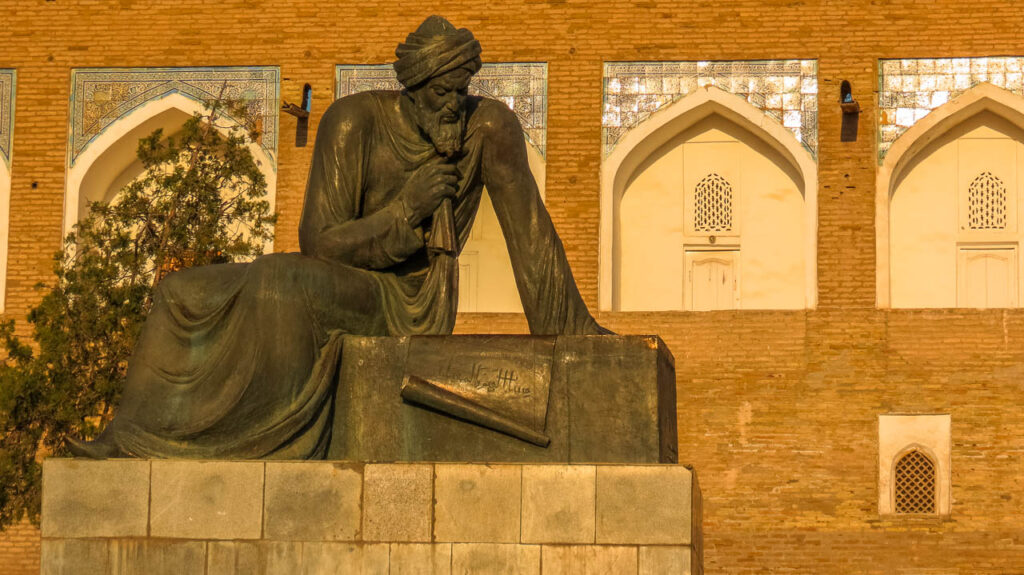
Statue of Muhammad ibn Musa al-Khwarizmi
Al-Khwarizmi is none other than the father of the algorithm. His name was translated into Latin as Algoritmi, and he was a celebrated scientist born in Khiva in 783.
11) Excursions to do from Khiva
A) Visiting the ancient castles of Khorezm in the desert (in the daytime)
The Khorezm desert fortresses, near Khiva, are located in the middle of the desert and are the vestiges of past civilizations. Some of them are Toprak Kala and Ayaz Kala, ancient cultures that once thrived in the Khorezm region, evidencing their advanced architecture and defensive systems.
Day trips are available, but there is also the possibility of sleeping in the desert in a yurt. There are campsites near the Ayaz Kala fortress and viewpoint.
📝 These excursions cost from 40 euros per person (although it would be better if you were a group of at least 3 people) and depend on the number of fortresses you want to see, and whether you want to spend the night there or not.
📷 Book here the day trip to desert fortresses near Khiva, where you are going to visit Topraq-Kala, Ayaz Kala and Janbas Qala. It includes: English-speaking guide, transport by car, entrance tickets and lunch at a local restaurant.
B) Excursion to the Aral Sea (minimum 2 days)
The Aral Sea, formerly one of the largest saltwater lakes, has undergone a dramatic decline in extent due to water management in the region. This significant reduction has negatively impacted countries surrounding the basin, such as Uzbekistan.
The drying up of the sea has led to serious environmental and socioeconomic consequences, affecting the lives of people who depend on its aquatic resources, such as those still living in Moynaq.
🔝 We visited the Aral Sea on our own, traveling first to Nukus and then to Moynaq. See our experience visiting Moynaq and the Aral Sea here.
📷 Interested in a tour that takes you all the way to the Aral Sea? Then have a look at this excursion where you will enter the Karakalpakstan region, where you can get into what is left of the Aral Sea and visit the Moynak ship cemetery, the Savitsky museum, the Moynak museum and the Chilpik fortress. The excursion is with driver and English-speaking guide. Yurt accommodation and meals are not included.
📷 If you are traveling with time and low budget, I have a more low-cost option for you: a tour just to the Moynak Boat Cemetery from Nukus. Keep in mind that you need to have a couple of days for this and spend some night in Nukus.
Useful facts for traveling to Khiva
Our impressions of Khiva
In our opinion, the most beautiful things to see in Khiva are walking through the narrow streets, the unfinished minaret of Kalta Minor and the sunset views from the watchtower of the Kuhna Ark fortress.
It may also be interesting to climb the minaret of Juma to see very good views from the center of the city. Apparently there is a stretch that is very dark, so one of the guys at the hostel told us that if we wanted to go up we should bring a flashlight.
Where to sleep in Khiva (Khiva)?
There are many options for lodging both inside the walled city and outside. For us, it is best to stay in the inner area of the wall, because you will have everything closer.
Our recommendations for accommodations in Khiva are as follows:
- Islam Khodja: is a simple, family-run guesthouse with air-conditioned rooms. The excellent treatment of the owner, the decorative details and the local food they prepare stand out.
- Arkanchi Hotel: Beautiful hotel in the walled area. It has a gym, sauna and restaurant. Its inner courtyard and terrace overlooking the minarets are two of its main facilities.
- Meros B&B: economical option, also family-run. Simple, clean and comfortable rooms. It has a terrace overlooking the walled area.
🏨 Do you want to look for other options? Find here the best accommodation in Khiva.
How to get to Khiva from Bukhara?
Shared cab:
The distance is 455 km and it can take about 6 h 30 to reach Khiva from Bukhara. Add to this the waiting time for the cab to fill up. The advantage? This is the most economical option, as we pay about 10-15 euros each at the current exchange rate.
If you are traveling on a budget, we have a tip that will help you in time and price. And if it is a car that is from Khiva, it will fill up sooner, as the driver will be in a hurry to get back. And also, perhaps, you can arrange a better price.
The key is in the car patents. Patents starting with 80 are Khiva cars and those starting with 90 are Bukhara cars.
🔝 Check out here the 25 things to see in Bukhara. And enjoy!
Private transfer:
If price is not an issue and you want to travel in comfort and without wasting time, then a private transfer would be the best option.
📷 Book your transfer from Bukhara to Khiva here.
Flights:
It is true that Khiva is quite a distance from the rest of Uzbekistan, so if you decide to fly there, you can count on the convenience of booking your transfers from the airport to the city center.
📷 Book your transfer from Khiva airport to the hotel (and vice versa) here.
Did you like our article about what to see in Khiva? You can leave us your comment and we’ll be happy for you to share it on social media!
What you need for your trips in Central Asia
Plan your trip easily with these trusted resources:
About prices
Prices can change frequently due to inflation, local conditions, or exchange rate fluctuations. The amounts mentioned in this article are indicative and reflect our visit or recent updates. It’s always a good idea to check current prices on site.


This has been the most comprehensive article about the current situation when it comes to the fees charged at the gate.
Thanks, Andrew.