

The Aral Sea was once one of the four largest lakes in the world. However, it has suffered a dramatic reduction in its extension and water volume. We tell you about our experience visiting the Aral Sea in Uzbekistan and our impressions.
The intensive use of its tributaries for irrigation and an arid climate is what has led the Aral Sea to an unprecedented environmental disaster, turning what was once a thriving ecosystem into a desolate landscape.
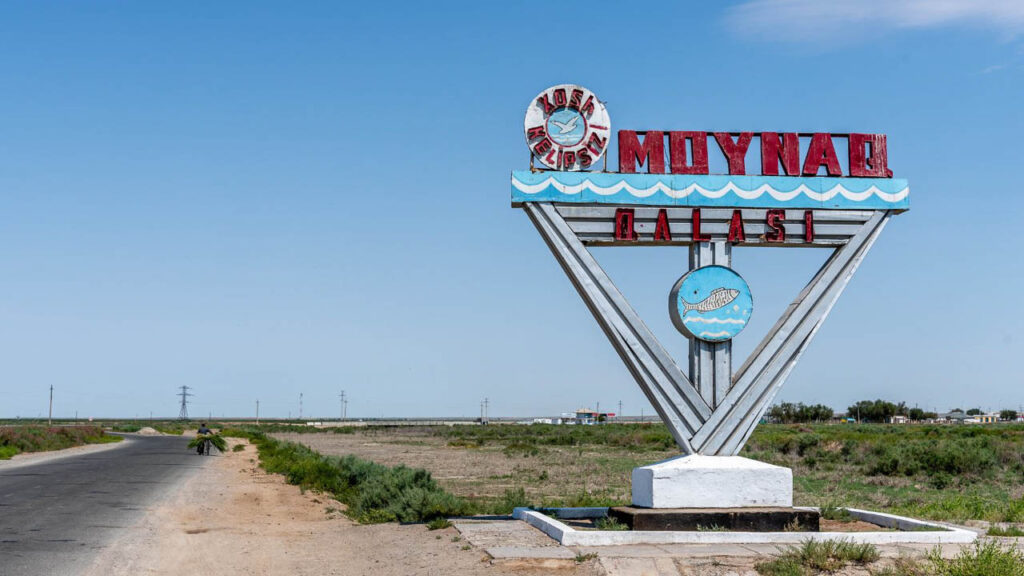
The town of Moynaq, once a thriving fishing port, now lies miles away from the seashore, leaving rusting ships and ruins visible, reminders of a glorious past submerged beneath the sands.
Meanwhile, Nukus, the capital of the Karakalpakstan Autonomous Republic, struggles to preserve its cultural identity and faces economic challenges due to the environmental crisis directly affecting the region.
Visiting the Aral Sea is essential to become aware of the fragility of ecosystems and the devastating impact that human intervention can have on nature.
We have this Travel Guide to Uzbekistan to help you plan your trip. Take a look at our tips!
🔝 See also our suggested itinerary for Uzbekistan in 15 days (and we’ll show you the one we did!).
Map, where is the Aral Sea?
About 200 kilometers north of the town of Nukus is the former fishing village of Moynaq. Why old? Because until 1960 its coasts were washed by the Aral Sea, of which today only memories remain. All because of the hand (and ambition) of man.
We leave you the map to locate where the Aral Sea is and how to visit Moynaq from Nukus or Khiva (Khiva).
🔝 You may be interested in this article with 11 things to see in Khiva. Don’t miss it!
The Aral Sea disaster in Uzbekistan
Much is said about man-made ecological disasters .
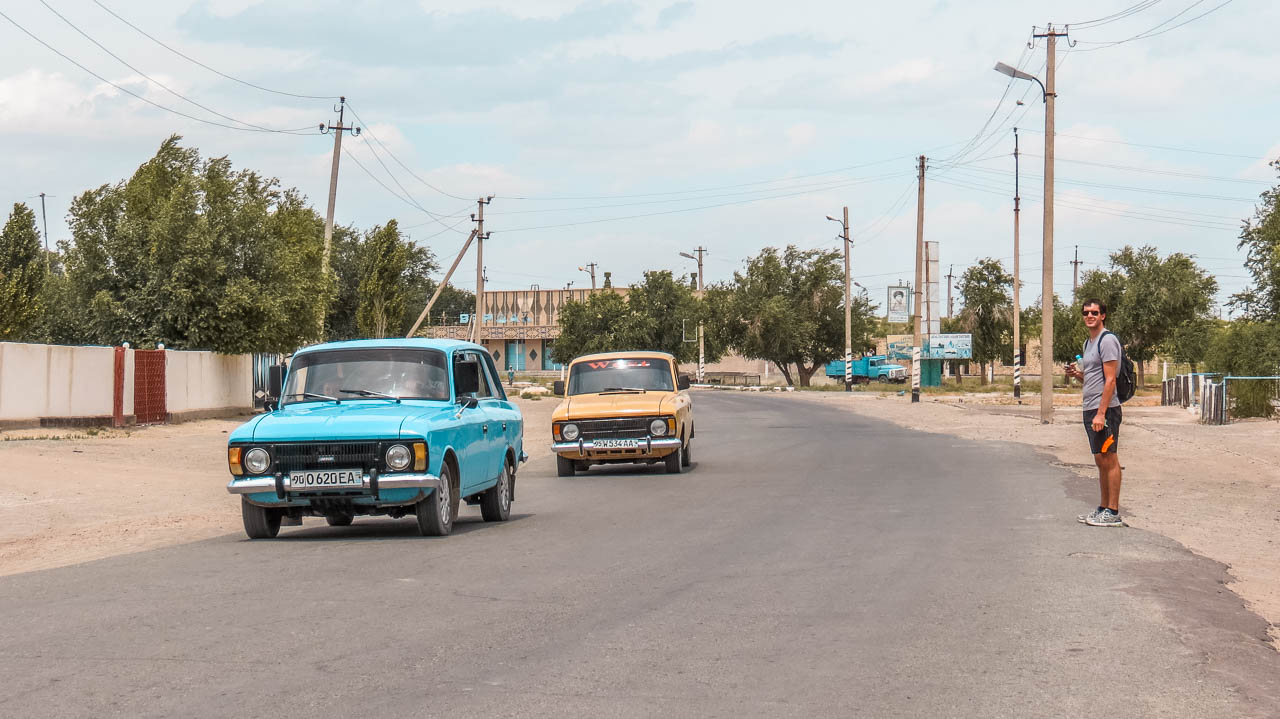
When you are told that Moynaq was a town full of fishing factories, that it was the main port of the region and that the local people bathed in its waters, it seems hard to believe when you are there.
And when you arrive you only see a desolate landscape, with factories in a total state of abandonment, pollution, extremely dry land and people longing for those baths. That’s what Moynaq is like today, and that’s why it’s important that you consider visiting the Aral Sea, or what was once the Aral Sea.
Why did the Aral Sea dry up in Uzbekistan?
The history of this disaster dates back to the 1960s, when the Aral Sea stretched over 66,000 square meters, with Moynaq as its main fishing port in the southern region. More than 500 ships sailed in its waters, extracting 25,000 tons of fish annually, with more than 20 million cans processed in the surrounding factories.
However, the unthinkable change came with the decision of the government of the former Soviet Union to allocate land in the region to massive cotton cultivation. To this end, they diverted the courses of two rivers, vital for the water supply to the Aral Sea, in order to irrigate these extensive plantations. What looked like a brilliant strategy on paper soon turned into a tragic blunder.
This progressive diversion resulted in a gradual decrease in water level. In just 40 years, the sea lost 80% of its original extent, a shocking testimony to the devastation caused by human interference in nature.
The consequences were immediately evident: the fishing industry ceased in 1979, leaving behind the ruins of the factories and triggering an economic crisis. More than 10,000 people lost their jobs, leading to a massive migration in search of opportunities.
By 2010, the Aral Sea had shrunk to just 12,000 square meters, with the total disappearance of animal and plant species, and high levels of salinity in the land, a direct consequence of dryness and pollution.
If you are going to visit the Aral Sea, you will see that in front of the Ship Cemetery there are several informative panels (modernized, since the ones I show in the photo are old), memorials that evoke the lost history of the region and a museum which displays old photographs and paintings of what the Aral Sea was like not so many years ago.

Visiting the Ship Cemetery in Moynaq
Today, Moynaq exhibits a bleak picture, once a thriving city reduced to a village of 10,000 inhabitants. The sea bed, now dry and some 150 kilometers distant, is home to the remains of ancient fishing boats, giant skeletons that evoke an era of fishing opulence.
Undoubtedly, the most striking image is that of those skeletons of ships stranded in the aridity, as if searching for answers to this tragedy. According to what we have been told, there were many more ships, although most were dismantled and sold for scrap.
In a meeting at the end of our tour, a local cab driver shared his childhood memories of swimming in these waters, as did many other vacationers. His face reflected a longing for those times, yearning for a future in which perhaps his descendants will be able to enjoy the same waters, if nature gives them a second chance.
📷 Book a private tour to the Moynaq ship cemetery from Nukus here.


Visiting the Museum of the History of the Aral Sea
This small museum was founded in 1988 and aims to be a moving testimony to the history of the Aral Sea. Located next to the remains of the ships that once plied its waters, this small enclosure exhibits photographs, paintings and maps that tell the story of the lost grandeur of this region.
It offers an illustrative video that immerses you in the transformation of the landscape, from its original splendor to the desolation caused by human intervention.
Despite its modest size, its value lies in showing how a thriving fishing port has become a nearly abandoned village, serving as a striking reminder of the devastating effects of human actions on the ecosystem.
The entrance fee is about 3 euros at the exchange rate (35,000 Uzbek som).
Excursion to the Aral Sea in Uzbekistan
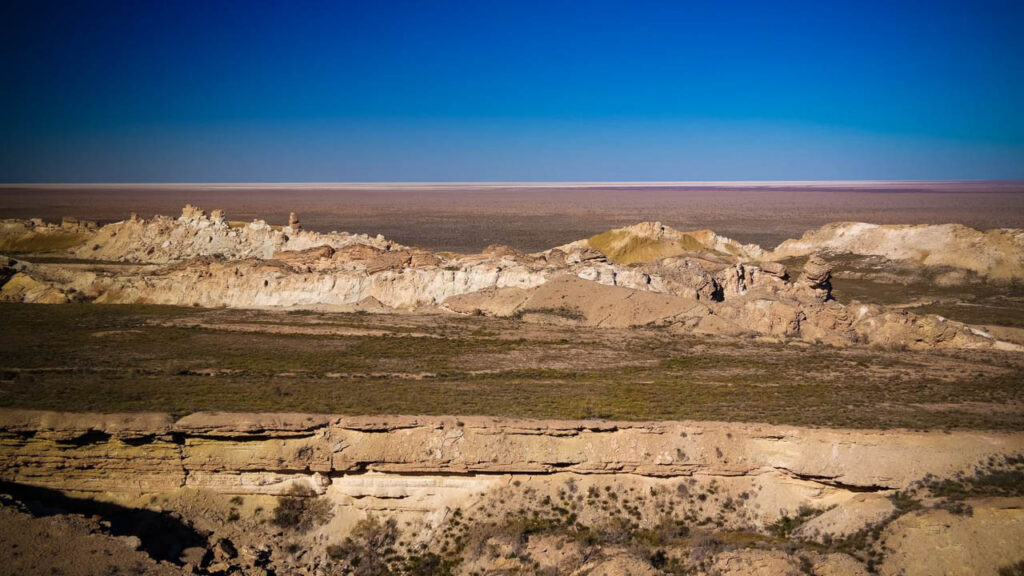
There are Aral Sea excursions that venture beyond Moynaq and often explore areas that were once submerged beneath the waters of the Aral Sea, now exposed as vast desert landscapes.
So not only will you get closer to the remains of ancient fishing villages. The disappearance of the waters radically transformed the lives of these communities, but also to areas where they can be observed. Traces of the wildlife that once thrived on the shores of the sea, even though today they are located in a deserted and desolate environment.
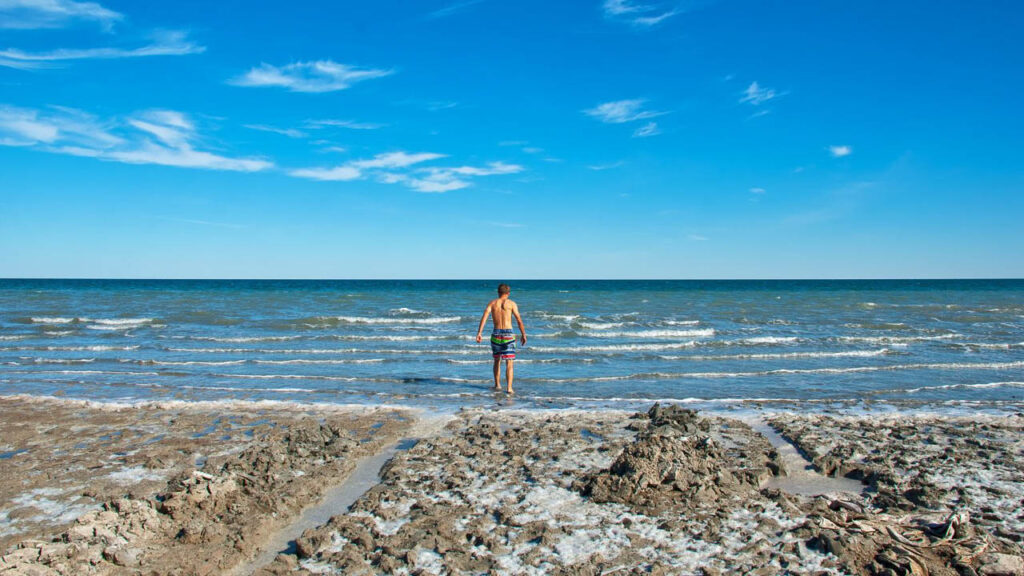
You will also have the opportunity, if you dare, to dive in the waters of the Aral Sea and sleep in a yurt in the desert.
📷 Book here Aral Sea Tour from Khiva, Urgench or Nukus. A two-day excursion where you will visit the fortress of Chilpik, the Savitsky museum in Nukus, the great canyons of Ustyurt, the ship cemetery of Moynaq and the museum of Moynaq, spending a night in a yurt.
The Aral Sea today
As reported on Al Jazeera, the Aral Sea has been divided into two parts, known as the Northern and Southern Aral. The Northern Aral Sea is undergoing ambitious restoration, being refilled with the help of the World Bank and the government of Kazakhstan, in order to restore its ecosystems.
As freshwater returns, the ecology of the Kazakh Aral recovers, encouraging the return of fish species from surrounding rivers and native fish breeding projects.
Useful facts for visiting the Aral Sea and Moynak Uzbekistan
Where to sleep in Nukus or Moynaq
We were based in the town of Nukus, 200 kilometers from Moynaq. There are several hotels to stay in the city. We leave you with two options:
- Jipek Joli: this is where we are staying. Very spacious and pleasant double room with new facilities. It has an interior patio where you can have breakfast or lunch which is very nice. Highly recommended.
- IDEAL Hotel: is a new and modern place to stay in Nukus. With spacious rooms and a quiet atmosphere, it’s a great option to relax after a long journey. The staff is genuinely attentive and makes you feel welcome from the very start.
- Nukus Guest House: is a budget-friendly, family-run accommodation with a warm and personal touch. You can sleep in a traditional yurt and experience local hospitality, as the owners live on-site and treat travelers like guests in their own home.
🏨 Want to look for other options? Find here the best accommodation in Nukus.
If you are traveling on your own and want to stay in Moynaq, very close to where the skeletons of the old fishing vessels are, there are a few options, see here where to stay in Moynaq!
How to get to the Aral Sea and visit it on your own
Travel from Khiva to Nukus, via Urgench, by shared cab
We did 200 km in 3 hs, in which we used a trolleybus (from Khiva to Urgench) and shared cab (from Urgench to Khiva), paying about 5.50 euros each at the exchange rate at that time. The trolleybus was the cheapest, the bulk is shared cab.
Travel from Nukus to Moynaq by BUS
To travel on your own to Moynaq, you must go to the Grand Bazaar of Nukus. From there you can take marshrutka number 5, which in 10 minutes takes you to the North Station of the city. Buses to Moynaq leave from this point.
We did 200 km in 3 h 45 m and paid about 2 euros per person in change. Don’t expect any comfort on the bus, they are very basic and crowded (in fact we did a section standing up).
In this way, the Aral Sea is not reached. Although it is possible to get to Moynaq and have someone take you there on a tour. A good option if you are traveling on your own, with time and low budget.
How to get to Moynaq or the Aral Sea by private cab or excursion
There is the option of hiring a private cab from Nukus, which takes you to and from Moynaq. Surely the hotel can arrange something for you. The private cab will not take you to the Aral Sea, only to the Boat Cemetery.
If you want to get to the Aral Sea, there is no other option but to hire an excursion. Imagine that there are no routes mapped out and a 4×4 truck is needed for the journey. In addition, it is an additional 150 km from Moynaq to reach the shore of the Aral Sea.
📷 These are the two options you have to book in advance:
– From Nukus to Moynaq to visit the ship graveyard.
– From Nukus, Khiva or Urgench to reach the Aral Sea in a 2-day excursion.
I hope you liked our experience visiting Moynaq and the Aral Sea in Uzbekistan and that it will help you when planning your trip.
What you need for your trips in Central Asia
Plan your trip easily with these trusted resources:
About prices
Prices can change frequently due to inflation, local conditions, or exchange rate fluctuations. The amounts mentioned in this article are indicative and reflect our visit or recent updates. It’s always a good idea to check current prices on site.


